When it comes to syncing our circadian rhythm, there’s one truth I’ve come to believe with full conviction:
Trust the light.
Not supplements. Not sleep apps. Light — natural, well-timed light — is the most powerful Zeitgeber (a German word for “time-giver”) that nature provides.
Use it right, and your body hums with rhythm: energized by day, peacefully asleep by night.
Use it wrong, and the damage can be subtle yet profound — often more insidious than CANS (Caffeine, Alcohol, Nicotine, and Sugar).
The beauty is, mastering light doesn’t require pills or gadgets. No biohacks or tools. Just a bit of awareness, and a few simple choices.
So today, let’s dive into the practice of light — one of the most fundamental, overlooked pillars of a Prime Life.
The Retina: The Sole Gateway for Melatonin Regulation
Deep inside your brain, nestled in the anterior hypothalamus, sits a tiny structure called the suprachiasmatic nucleus (SCN). This is your master circadian clock, quietly orchestrating countless physiological rhythms each day.
In the morning, when high-intensity blue light hits your eyes, the SCN springs into action: melatonin production plummets, cortisol rises, core body temperature climbs, and your body shifts from nighttime repair mode to daytime alertness[1–3].
Throughout the day, the SCN helps you stay focused and awake, while slowly accumulating adenosine in the background — laying the groundwork for the sleep pressure that builds toward night.
As dusk approaches, and light dims, the SCN flips the switch: melatonin is released, body temperature cools, and your internal repair system kicks in for overnight maintenance3,4.
This entire rhythm is exclusively governed by light signals received by your eyes — specifically, by light-sensitive cells in the retina that express a protein called melanopsin5.
Here’s the precise chain of command:
Light → Retina → Melanopsin activation → Signal to SCN → Sympathetic nervous system → Pineal gland → Melatonin suppression or release
This is fundamentally different from how sunlight helps your skin synthesize vitamin D. Your skin can’t regulate melatonin. That power rests solely with your eyes[6–8].
Wavelength: Is Your Light Putting You to Sleep, or Keeping You Awake?
Light’s impact on your circadian rhythm is determined by two key parameters: wavelength (nm) and intensity (Lux).
Let’s start with wavelength — the “color” of light, from blue to red.
👁️ Melanopsin’s Worst Enemy: Blue Light
Melanopsin is extremely sensitive to 460–480 nm wavelengths — aka blue light. Even small amounts in this range can dramatically suppress melatonin and delay your body’s transition into sleep[9–11].
That’s why screens — LEDs, smartphones, tablets, laptops — are such potent sleep disruptors. They blast blue light at your retina, constantly telling your brain: “It’s still daytime.”
Green and violet light, close cousins of blue, can also interfere with melanopsin.
On the flip side, light with wavelengths above 550 nm — yellows, oranges, reds — has a much weaker impact on melatonin. Unless these warm lights are blindingly bright (in the thousands of Lux), they barely affect your sleep9,12.
So, here’s one obvious rule for better sleep:
In the 1–2 hours before bed, minimize blue light exposure. Switch to warm-toned lighting — reds, ambers, and soft yellows.
Color Temperature: Can’t Understand Wavelengths? Use Kelvin.
Most light fixtures don’t list their wavelength. But they do list something easier to interpret: color temperature, measured in Kelvin (K).
While not a precise measure of wavelength, color temperature correlates strongly with a light’s blue-light content. You can think of it as how “cool” or “warm” the light feels.
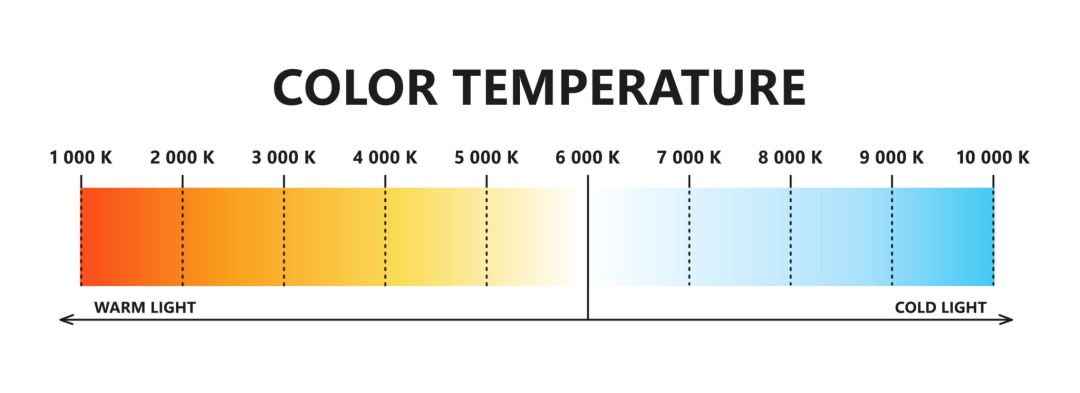
- 1000–2700 K: Candlelight, sunset, red/orange glow = sleep-friendly
- 4000–6000 K: Office lighting, fluorescent = increased blue light
- 6000+ K: Midday sunlight = blue-rich wake-up light13,14
🔆 Rule of Thumb:
At night, choose bulbs under 2700 K. Ideally, 1000–2000 K — that’s sunset territory. These warmer lights signal your body: “The sun is down, time to rest”12,15.
Light Intensity: Even Red Light Can Wake You Up
Even if your night light is red, if it’s too bright, it can still keep you awake. At Prime Lab, our research and self-experiments consistently show: intensity alone can act as a wake-up trigger for the SCN12,16.
📏 What Is Lux?
Lux measures how much light hits a surface per square meter:
Lux = Lumens / m²
The higher the number, the brighter the light — and the stronger its alerting effect17.
Here’s how various environments stack up:
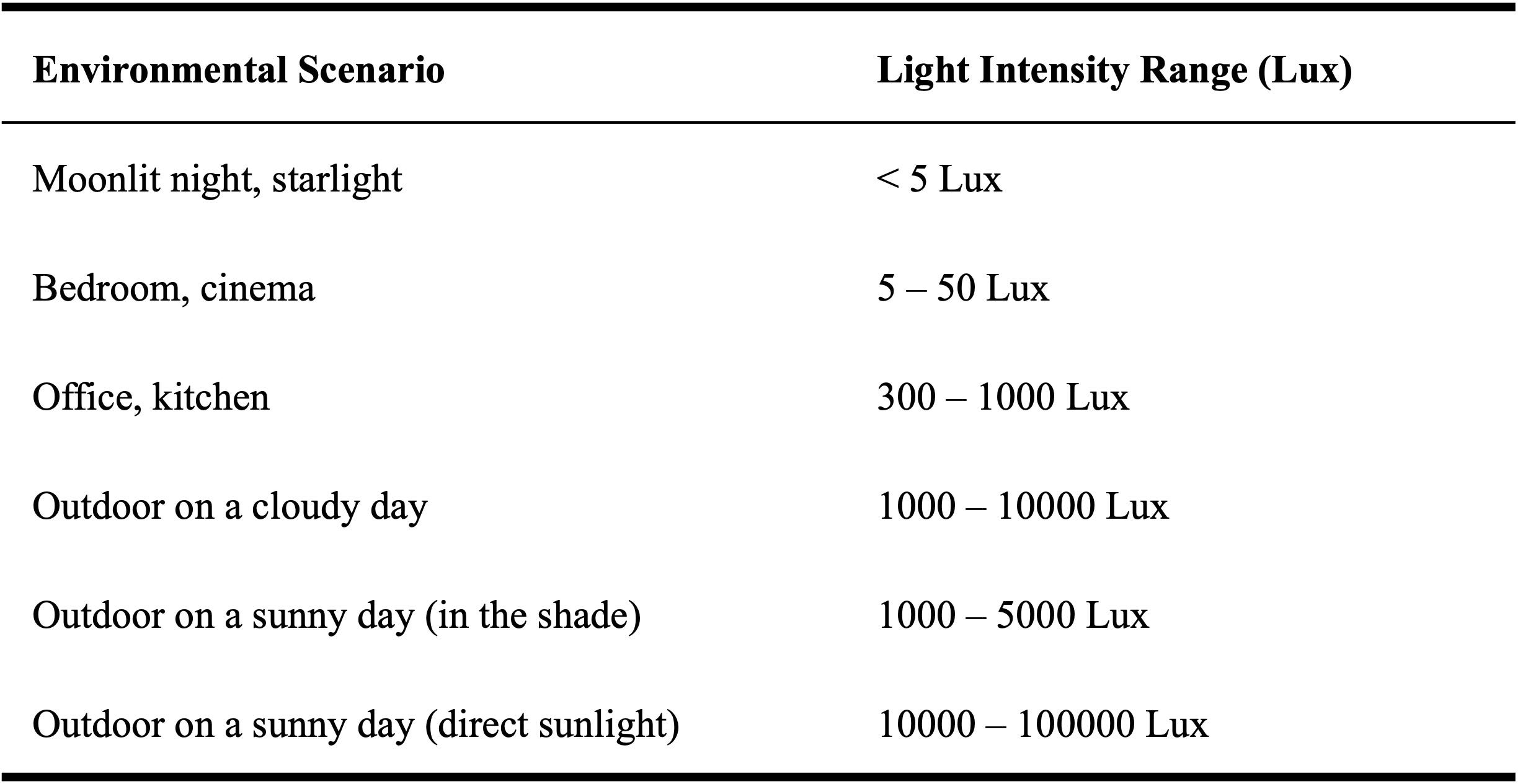
Interestingly, even the brightest office can’t compete with an overcast sky.
If you’re sitting by a sunlit window, light intensity can reach 500–1500 Lux. But move just a few meters away from that window, and indoor levels drop to 30–800 Lux — barely above the brightness of standard indoor lighting17,18.
Why don’t we feel this difference?
Because our powerful eyes and brain are incredibly adaptive — they automatically adjust, making indoor and outdoor light feel similar.
But your SCN doesn’t care how things feel. It only responds to absolute intensity.
When it comes to falling asleep, the darker, the better — ideally, 0 Lux16,19.
And here’s the kicker: even a brief flash of bright light at night — like glancing at your phone or flicking on the bathroom light — can confuse your brain into thinking it’s morning, suppress melatonin, and pull you out of deep sleep[20–22].
So, the pre-sleep light protocol boils down to this triple strategy:
- Warm wavelengths (yellow, orange, red)
- Low color temperature (<2700 K)
- Low light intensity (<50 Lux, ideally much darker)
The Digital Dopamine Trap: Blue Light’s Not the Only Problem
What disrupts sleep isn’t just blue light itself.
It’s the carriers of blue light — the devices that deliver it — along with the dopaminergic content they feed us.
Smartphones, laptops, TVs — they blast blue light, yes. But more dangerously, they serve up dopamine-sparking stimuli: binge-worthy shows, viral videos, endless social feeds, addictive games. These hijack your reward system, spike norepinephrine and dopamine, keep your sympathetic nervous system activated, and make it nearly impossible to wind down.
This is a double hit to your sleep: blue light + brain stimulation.
And I’ll be honest: I struggle with this myself.
Out of all the Prime Lab practices, turning off digital devices 1–2 hours before bed is, for me, the hardest one. I don’t yet have a consistent success story — only scattered, temporary victories.
But there are two things I’ve found helpful, and I recommend you try them too:
1. Turn on “Night Shift” or “Red Tint” on Screens
Most devices now have a built-in “Night Shift” or “Night Light” feature. Some go further, offering red-tinted display options.
At first, it’ll feel strange — like viewing everything through a sepia filter. But after a few days, your eyes adjust, and it starts to feel normal.
This is low effort, sustainable, and highly effective. A great beginner-friendly intervention.
2. Wear Blue-Light-Blocking Glasses (with Yellow Tint) at Night
Get yourself a pair of amber- or yellow-tinted glasses designed to block blue wavelengths. Wear them at home while watching screens at night.
They significantly reduce stimulation to melanopsin receptors, helping your brain maintain its natural wind-down process.
Yes, the lenses have a slight yellow hue — but after a while, you’ll barely notice. They’re comfortable and easy to get used to. You can order them online or have them custom-made at most optical shops.
Light Practice Summary from Prime Lab
🌞 Morning: Step Outside Within 15 Minutes of Waking
- Outdoor light, even on cloudy days, far outshines indoor light.
- Getting light into your eyes shuts off the night program (melatonin), and rapidly wakes up your body.
- Your eyes, not your skin, need to see the light.
- Sunscreen doesn’t block this effect — melanopsin still receives the signal.
- Morning UV levels are usually gentle; no need to worry about skin damage.
This is one of the simplest yet most overlooked circadian hacks.
If you only do one thing to improve your rhythm, make it this.
🌇 Evening: Shift from Cool to Sleep-Friendly Light
As the sun sets:
- Switch your devices to “Night Shift” or “Red Tint” to reduce blue light exposure.
- Use warm-toned lights indoors — under 2700 K is ideal. Think soft yellow, orange, or red glows.
This tells your SCN: “The sun is down. Time to rest and repair.”
It’s a subtle but powerful signal to ease your body into night mode.
🌙 One Hour Before Bed: Turn Off Excitement, Turn On Repair
This is your transition zone.
Cut out digital stimulation — not just to avoid blue light, but to steer clear of dopamine and stress that keep your brain buzzing.
Instead, create your own pre-sleep ritual. A rhythm you can rely on night after night:
- 🛁 Take a warm bath or soak your feet
- 📖 Read a physical book
- 📝 Journal or reflect on the day
- 🧘 Practice breathwork or light meditation
- 🎵 Listen to calming music
- 🔴 Use red light therapy
This isn’t a checklist to follow rigidly.
It’s a menu to help you discover a rhythm that works for your life — something you can actually sustain.
Intervention recommendations are geared toward generally healthy individuals. If you have existing health conditions, always follow your doctor’s instructions.
References
[1]Ma M, Morrison SF. Neuroanatomy, Nucleus Suprachiasmatic. StatPearls. 2023.
[2]Lu Q, Wen X, Chen L. Mammalian circadian networks mediated by the suprachiasmatic nucleus. FEBS J. 2022 Jun;289(11):2946–2969.
[3]Skubic C, Fekete Z, Béla Z. Circadian biomarkers in humans: methodological insights and clinical implications. Biomolecules. 2025;15(7):1006.
[4]Begemann K, Oster H. Endocrine regulation of circadian rhythms. Nat Rev Endocrinol. 2025;21(2):71–89.
[5]Berson DM, Dunn FA, Takao M. Phototransduction by retinal ganglion cells that set the circadian clock. Science. 2002 Feb;295(5557):1070–1073.
[6]Graham DM, Wong KY. Melanopsin-expressing intrinsically photosensitive retinal ganglion cells. In: Webvision. 2016.
[7]Yuan M, Li Q, Xu Y. Retinal light perception and biological rhythms. Mol Med Rep. 2025;31(2):59.
[8]Najjar RP, Zeitzer JM. Melatonin suppression by light involves different retinal pathways in young and older individuals. J Pineal Res. 2024;76(3):e12930.
[9]Gooley JJ, Rajaratnam SMW, Brainard GC, et al. Spectral responses of the human circadian system depend on duration of exposure to light. Sci Transl Med. 2010 May;2(31):31ra33.
[10]Wahl S, Engelhardt M, Schaupp P, et al. The inner clock — blue light sets the human rhythm. J Biophotonics. 2019;12(12):e201900102.
[11]Chang AM, Aeschbach D, Duffy JF, Czeisler CA. Evening use of light-emitting eReaders negatively affects sleep, circadian timing, and next-morning alertness. Proc Natl Acad Sci U S A. 2015 Jan;112(4):1232–1237.
[12]Brown TM, Brainard GC, Cajochen C. Recommendations for daytime, evening, and nighttime indoor light exposure to best support physiology, sleep, and wakefulness in healthy adults. PLoS Biol. 2022 Mar;20(3):e3001571.
[13]LightingStyle. The ultimate guide to lighting colour temperature. 2023.
[14] HL-Life. What Is Color Temperature? Definition and Color Temperature Chart. 2024.
[15]Fernandez FX, et al. Current insights into optimal lighting for promoting sleep and circadian health. Nat Sci Sleep. 2022;14:25–39.
[16]Cain SW, Chang AM, Phillips AJK, et al. Evening home lighting adversely impacts the circadian system and sleep. Sci Rep. 2020;10:19110.
[17]Engineering Toolbox. Illuminance — Recommended light levels. 2003.
[18]ETAP Lighting. Lux and lumen — what’s the difference? 2024.
[19]Gooley JJ, et al. Exposure to room light before bedtime suppresses melatonin onset and shortens melatonin duration in humans. J Clin Endocrinol Metab. 2011;96(3):E463-E472.
[20]Zeitzer JM, Ruby NF, Fisicaro RA, Heller HC. Response of the human circadian system to millisecond flashes of light. PLoS One. 2011;6(7):e22078.
[21]Zeitzer JM, Fisicaro RA, Ruby NF, Heller HC. Millisecond flashes of light phase delay the human circadian clock during sleep. J Biol Rhythms. 2014;29(5):370–376.
[22]Chinoy ED, Duffy JF, Czeisler CA. Unrestricted evening use of light-emitting tablet computers delays self-selected bedtime and circadian phase. Physiol Rep. 2018;6(10):e13692.