65. Mind Before Sleep Should Look Like This: No Planning, No Problem-Solving, No Responsibility, No Judgment
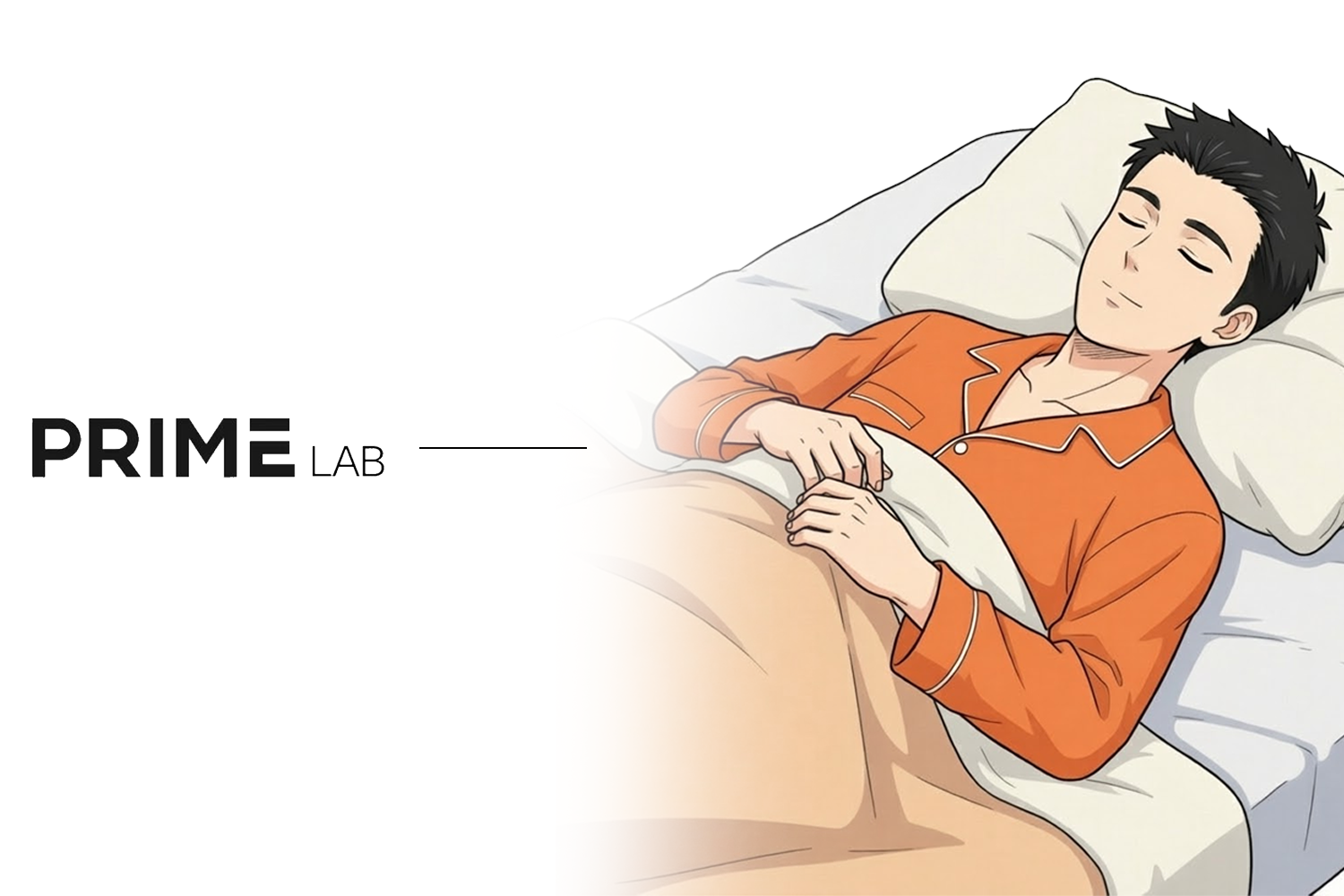
Painted by AI
If you struggle with falling asleep, this one is for you. Today, I want to talk about the mental state before sleep.
Falling asleep is not the same as shutting down a machine. It is a state transition of the nervous system.
We shift from a highly mobilized, “on-alert” survival mode into a very different state — one that allows repair, allows loss of control, and allows us to temporarily stop holding the world together.
Both of these states arise automatically. They are not fully under conscious control. They are governed by a critical regulatory system: the autonomic nervous system (ANS), which consists primarily of the sympathetic and parasympathetic branches [1–3].
From a neurophysiological perspective, falling asleep is the process of shifting dominance from the sympathetic nervous system to the parasympathetic nervous system. During the first half of the night — especially during non-rapid eye movement (NREM) sleep, including deep sleep — the parasympathetic system predominates. In the second half of the night, as dreaming increases, sympathetic activity gradually rises again during REM sleep, until we wake fully 4,5.
When the sympathetic system refuses to go offline before sleep, and the parasympathetic system cannot fully come online, difficulty falling asleep — or outright insomnia — often follows 6.
There are many causes of sleep-onset difficulty. Sympathetic or HPA-axis–dominant patterns (HPA: hypothalamic–pituitary–adrenal axis) are one major mechanism. Other contributors include circadian phase delay (which we’ve discussed previously), and conditioned arousal — based on classical conditioning — such as repeatedly scrolling on your phone in bed, training your brain to associate “bed” with “wakefulness.”
In real life, insomnia is often the result of several mechanisms acting together. Today, I want to focus on just one: sympathetic dominance 7.
Sympathetic vs. Parasympathetic
The sympathetic and parasympathetic systems do not determine what we think — that is the job of the central nervous system. They determine something more fundamental: whether we still need to deal with the world 8.
During the day, the world constantly demands responses, decisions, and actions. As a result, the sympathetic system is easily activated. At night, when the external world recedes, the body should gradually exit “response mode,” allowing parasympathetic activity to take over and create the physiological conditions for repair and recovery 9.
At its core, sleep is a transition from continuous engagement to permission to stand down.
When the sympathetic system is online, the implicit message is: “Today is not over yet. I still need to handle things. I can’t fully relax.”
In this survival state, the body tends to show a coherent cluster of changes — not causal in one direction, but tightly coupled [9–11]:
- Elevated norepinephrine (NE) and related stress hormones
- Higher heart rate
- Lower heart-rate variability (HRV)
- Persistent muscle tone
- A narrowing of attention toward goals and problems
- A brain and body biased toward risk evaluation, strategy generation, and problem-solving
When the parasympathetic system comes online, the implicit message shifts to: “I can let this go for now. Some loss of control is tolerable.”
In a relatively predictable, low-threat environment, the body gradually exits constant readiness and activates repair and recovery programs. A different but equally coherent set of changes emerges — again, as co-occurring phenomena rather than a simple causal chain [12–13]:
- Lower norepinephrine (NE) and related hormone levels
- Slower heart rate
- Higher HRV (HRV is typically higher during NREM sleep and lower during REM; this pattern broadly tracks parasympathetic vs. sympathetic dominance)
- Progressive muscle relaxation
- A shift from narrowed perception to a more open, associative awareness
- A mental transition from “solving problems” to “narrating, integrating, and digesting experience”
Seen this way, the sympathetic and parasympathetic systems represent two complementary survival paradigms 14:
- Sympathetic prepares us to confront threats; parasympathetic supports repair after action
- Sympathetic faces uncertainty; parasympathetic builds predictability
- Sympathetic enters combat readiness; parasympathetic returns to safety
- Sympathetic emphasizes control; parasympathetic allows letting go
- Sympathetic supports action; parasympathetic supports recovery
- Sympathetic is plan-oriented; parasympathetic favors narrative and integration
The sympathetic system solves problems. The parasympathetic system allows experience to unfold without control or judgment — a narrative without intervention [15–17].
The sympathetic system helps us survive in the world. The parasympathetic system allows us to return to ourselves when survival mode is no longer required.
Chronic Sympathetic Dominance: The Background Noise of Modern Nights
To some extent, modern life itself is designed to keep the sympathetic system chronically dominant.
High-pressure work environments, relentless competition, algorithm-amplified anxiety loops, and constant cognitive stimulation — combined with nicotine, alcohol, caffeine, and high-sugar diets — all raise the baseline tone of the sympathetic system. The body lingers in a state of “unfinished business” for far longer than it was ever designed to.
At night, blue-light exposure, late-night eating, and dopamine-driven digital consumption — short videos, games, social media — may not directly activate the sympathetic nervous system, but they keep the brain alert and engaged. This further narrows the window in which the parasympathetic system can take over.
The result is that even after lying down in bed, the body continues to run a low-level surveillance program in the background:
A state with no clear threat — yet no true stand-down either.
Regulating Sympathetic vs. Parasympathetic: It Starts With a Thinking Pattern
The switch between sympathetic and parasympathetic dominance ultimately depends on the brain’s assessment of a single question:
“Do I still need to respond right now?”
If the answer is yes, the sympathetic system mobilizes. Only when the environment is judged safe does the parasympathetic system get a chance to take over.
This evaluation is carried out automatically by networks involving the limbic system (including the amygdala), the brainstem, and the hypothalamus. It does not rely on conscious, rational thought. When the system detects “threat” or “unfinished business,” it activates the sympathetic-adrenal response, often reinforced by longer-lasting hormonal mobilization via the HPA axis — such as cortisol release.
This is why, when you can’t sleep, trying harder to fall asleep often makes things worse [18–20].
Does that mean conscious thinking is completely powerless? Not quite.
While explicit thought cannot directly flip the autonomic switch, it can influence the system indirectly — through attention, interpretation, and repetition — by gradually recalibrating the brain’s threat thresholds and baseline assumptions about the world.
In other words, some thinking styles tend to sustain sympathetic dominance, while others create conditions that allow parasympathetic takeover.
For sleep, the key is not “stopping thought,” but stopping the mode of thinking that requires control, problem-solving, and responsibility, and shifting into a mental state that feels safer, more accepting, and less urgent 21.
This is where training mental paradigms matters — and its value goes far beyond sleep.
Four Parasympathetic-Friendly Thinking Paradigms
Training thinking patterns is subtle work.
The shift from sympathetic to parasympathetic thinking often happens in a single moment — a single mental turn.
The same activity — journaling, storytelling, conversation — can either help the parasympathetic system come online or, with one small mental twist, pull the sympathetic system right back to center stage.
For overachievers — people accustomed to problem-solving, self-optimization, and relentless forward motion — it’s easy to unknowingly run nearly all inner activity in sympathetic mode.
Making the switch requires awareness — and practice 22,23.
Here are four thinking paradigms distilled by Prime Lab that support parasympathetic dominance:
Paradigm 1: Don’t Control the Future
Sympathetic thinking:
- What should I do next?
- What if this fails?
- I need a clear plan
Parasympathetic thinking:
- This has already happened
- I’m reviewing, understanding, digesting
- Nothing needs to be changed right now
👉 Planning sustains sympathetic dominance 👉 Narrating what has already occurred supports parasympathetic takeover 22
Paradigm 2: Don’t Solve Problems
Sympathetic thinking:
- Goal-oriented
- Searching for optimal solutions
- “Improve,” “optimize,” “prevent next time”
Parasympathetic thinking:
- Seeing things as they are
When you treat “falling asleep” as a problem to solve, that very framing makes sleep harder.
This isn’t motivational talk. It’s neurophysiology 23.
Paradigm 3: No Responsibility Required
Sympathetic state:
- The brain is still on duty
- This won’t work without me
- If I haven’t figured it out, it’s unsafe
Parasympathetic state:
- No decisions are required of me right now
- Life is longer than this moment
You don’t fall asleep because you’ve “figured everything out.” You fall asleep because you’ve clocked out.
If you must understand everything before you rest, you’ll never truly rest.
Life is long. Sleep first 22.
Paradigm 4: Don’t Rush to Judge
Sympathetic state:
- Why am I like this?
- Is this right or wrong?
Parasympathetic state:
- Let experiences and emotions flow naturally
- Sense and observe without rushing to explain or correct
- No judgment of self or others 21
Final Thoughts
People who plan, take responsibility, and hold themselves to extremely high standards — problem solvers, overachievers — may find today’s title deeply uncomfortable.
But that discomfort itself may be the signal.
You may have become too accustomed to standing permanently in a posture of “dealing with the world.”
The issue has never been whether you are trying hard enough. The issue is whether you allow yourself to stand down when no response is required.
Sleep is not a reward for those who have figured everything out.
Sleep happens to those who have finally gone off duty.
Training your nighttime thinking patterns is, at its core, practice in reclaiming a capacity that modern life keeps stealing from us:
The ability to stop responding — when it is safe to do so.
In the next piece, we’ll talk about how to turn this capacity into concrete nighttime practices: Winding Down Routines.
Intervention recommendations are geared toward generally healthy individuals. If you have existing health conditions, always follow your doctor’s instructions.
References
[1]Brown RE, Basheer R, McKenna JT, Strecker RE, McCarley RW. Control of sleep and wakefulness. Physiol Rev. 2012 Jul;92(3):1087–1187.
[2]Saper CB, Scammell TE, Lu J. Hypothalamic regulation of sleep and circadian rhythms. Nature. 2005 Oct;437(7063):1257–1263.
[3]Fink AM, Bronas UG, Calik MW. Autonomic regulation during sleep and wakefulness: a review with implications for defining the pathophysiology of neurological disorders. Clin Auton Res. 2018 Dec;28(6):509–518.
[4]Chouchou F, Desseilles M. Heart rate variability: a tool to explore the sleeping brain? Front Neurosci. 2014 Dec 12;8:402..
[5]de Zambotti M, Trinder J, Silvani A, Colrain IM, Baker FC. Dynamic coupling between the central and autonomic nervous systems during sleep: A review. Neurosci Biobehav Rev. 2018 Jul;90:84–103.
[6]Harvey AG. A cognitive model of insomnia. Behav Res Ther. 2002 Aug;40(8):869–893.
[7]American Academy of Sleep Medicine. International classification of sleep disorders — third edition text revision (ICSD-3-TR): supplemental material. Darien (IL): American Academy of Sleep Medicine; 2023.
[8]Benarroch EE. The central autonomic network: functional organization, dysfunction, and perspective. Mayo Clin Proc. 1993 Oct;68(10):988–1001.
[9]Somers VK, Dyken ME, Mark AL, Abboud FM. Sympathetic-nerve activity during sleep in normal subjects. N Engl J Med. 1993 Feb 4;328(5):303–307.
[10]Fink AM, Bronas UG, Calik MW. Autonomic regulation during sleep and wakefulness: a review with implications for defining the pathophysiology of neurological disorders. Auton Neurosci. 2018 May;212:1–9.
[11]Task Force of the European Society of Cardiology and the North American Society of Pacing and Electrophysiology. Heart rate variability: standards of measurement,
[12]Dodt C, Breckling U, Derad I, Fehm HL, Born J. Plasma epinephrine and norepinephrine concentrations of healthy humans associated with nighttime sleep and morning arousal. Hypertension. 1997 Jul;30(1):71–76.
[13]Rasch B, Dodt C, Mölle M, Born J. Sleep-stage-specific regulation of plasma catecholamine concentration. Psychoneuroendocrinology. 2007 Sep;32(7):884–891.
[14]Gianaros PJ, Wager TD. Brain-body pathways linking psychological stress and physical health. Curr Dir Psychol Sci. 2015 Aug;24(4):313–321.
[15]Aston-Jones G, Cohen JD. An integrative theory of locus coeruleus-norepinephrine function: adaptive gain and optimal performance. Annu Rev Neurosci. 2005;28:403–450.
[16]Arnsten AFT. Stress weakens prefrontal networks: molecular insults to higher cognition. Nat Neurosci. 2015 Oct;18(10):1376–1385.
[17]Thayer JF, Lane RD. A model of neurovisceral integration in emotion regulation and dysregulation. J Affect Disord. 2000 Dec;61(3):201–216.
[18]Gianaros PJ, Wager TD. Brain-body pathways linking psychological stress and physical health. Curr Dir Psychol Sci. 2015 Aug;24(4):313–321.
[19]Dressle RJ, Feige B, Spiegelhalder K, Schmucker C, Benz F, Mey NC, et al. HPA axis activity in patients with chronic insomnia: a systematic review and meta-analysis of case-control studies. Sleep Med Rev. 2022;62:101588.
[20]Espie CA, Broomfield NM, MacMahon KMA, Macphee LM, Taylor LM. The attention-intention-effort pathway in the development of psychophysiologic insomnia: a theoretical review. Sleep Med Rev. 2006 Aug;10(4):215–245.
[21]Edinger JD, Arnedt JT, Bertisch SM, Carney CE, Harrington JJ, Lichstein KL, et al. Behavioral and psychological treatments for chronic insomnia disorder in adults: an American Academy of Sleep Medicine clinical practice guideline. J Clin Sleep Med. 2021 Feb;17(2):255–262.
[22]Espie CA, Broomfield NM, MacMahon KMA, Macphee LM, Taylor LM. The attention-intention-effort pathway in the development of psychophysiologic insomnia: a theoretical review. Sleep Med Rev. 2006 Aug;10(4):215–245.
[23]Riemann D, Spiegelhalder K, Feige B, Voderholzer U, Berger M, Perlis M, et al. The hyperarousal model of insomnia: a review of the concept and its evidence. Sleep Med Rev. 2010 Feb;14(1):19–31.