In the previous article, I laid out how to optimize protein intake for Muscle Protein Synthesis (MPS): resistance training, nutrient timing, energy state, and sleep.
I left one question hanging: under what circumstances might you actually lose muscle (MPB, or Muscle Protein Breakdown)?
In everyday life, many habits tip our metabolism toward catabolism. Many friends and I struggle with it — training consistently, eating adequately — but muscles stubbornly refuse to grow.
So this one is for you: here are the most common scenarios you might recognize.
1. The Double‑Edge Sword of Exercise: Stimulation vs. Breakdown
Scenario 1. Fasted Morning Training (<1 hour): A metabolic sweet spot — if refueled promptly
In the morning, low insulin and low glucose create a natural stage set for metabolic activation. Light exercise during this window — whether Zone 2 cardio, fasted walking, or even resistance training — can kickstart your day’s metabolism without much disruption.
Concern often arises: Will training on an empty stomach cause muscle loss?
As long as you eat soon afterward, fasted training does NOT significantly increase MPB. On the contrary, it may boost metabolic sensitivity and enhance the MPS response — provided you follow it up with nutrition in time.
Delay refueling, especially after high-intensity or prolonged training, and you risk shifting into net breakdown.
Why might fasted training be more effective?
Reduced glycogen means your body relies more on fat oxidation, improving insulin sensitivity. With controlled duration and appropriate post‑workout nutrition, you won’t “burn” muscle — instead, you activate an efficient metabolic window.
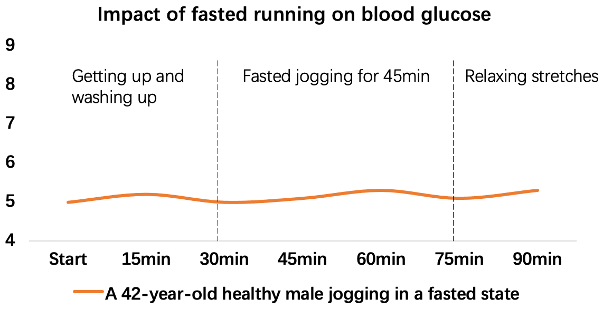
I wear a CGM myself — and after adapting over a few days, blood glucose during fasted morning workouts stays as stable as during sleep.
Tip:
- Fasted Zone 2 or moderate resistance is fine if followed by breakfast.
- Consume ~20–30 g protein (e.g., 25 g whey or 100 g chicken breast) plus carbs within 60 minutes.
- If more than 2 hours pass before eating — especially after intense or long sessions — MPB risk rises.
- Beginners may benefit from a small pre-workout snack (e.g. half banana + protein powder), then adapt quickly.
Scenario 2. Zone 2 Aerobic (60–70% HRmax): Safest longevity training — fat‑powered, muscle‑preserving
Zone 2 — often called the “metabolic reorganizer” — is ideal for mid‑life training. For someone around 40 (HRmax ≈180), this translates to a heart rate of ~108–126 bpm, whether walking, light jogging, or cycling.
This zone mainly burns fat, boosts mitochondrial efficiency, enhances insulin sensitivity, and typically doesn’t trigger protein breakdown. Research shows even older adults walking in Zone 2 improves quadriceps synthesis and delays muscle loss.
Tip:
- Zone 2 cardio can be done daily, with no extra meals needed.
- It’s ideal for preserving muscle, burning fat, slowing aging, managing stress, and improving sleep.
Scenario 3. Moderate Aerobic (70–80% HRmax, <1 hour): Glycogen‑driven, slight amino acid oxidation
For 40‑year‑olds, this equates to ~126–144 bpm. At this intensity, energy is glycogen‑based, and about 3‑5% may come from amino acid oxidation. Without resistance training and with inadequate protein, frequent sessions may lead to mild muscle loss[1–3].
Tip:
- Supplement protein post‑training (20–30 g)
- Schedule resistance sessions away from aerobic work to avoid interference
- Avoid overdoing frequent cardio alone when trying to build muscle.
Scenario 4. Endurance Training (70–80% HRmax, >1 hour): Dual fuel demand drives high MPB risk
During prolonged moderate‑high intensity sessions, as glycogen depletes, your body may turn to gluconeogenesis — converting muscle-derived amino acids into glucose — for brain and red blood cell fuel.
Even with carb intake, if duration is too long or nutrition inadequate, muscle breakdown can outweigh synthesis.
Many marathon runners lose body weight after training — but much of that is muscle, not fat (and sometimes body fat percentage even increases). Endurance training demands precise nutrition to avoid muscle loss.
Tip:
- Supplement mid‑session with carbs or EAA
- 2–3 resistance sessions weekly
- Refuel heavily post‑training to blunt MPB.
Scenario 5. High‑Frequency Resistance Training: Inflammation + injury risk make recovery critical
Training the same muscle group more than three times a week can backfire. Resistance training activates mTOR for hypertrophy — but if recovery is insufficient (poor protein, poor sleep), this activation can become a slippery slope toward breakdown.
For people over 40, high-frequency regimens increase inflammation, impair immunity, disrupt sleep, and raise injury risk, all hindering muscle synthesis.
Tip:
- Don’t train a muscle group more than 2–3 times/week.
- If you do, structure it cyclically (e.g., three intense days + one light day)
- Refuel within one hour post-workout
- Consider a night-time casein protein to support overnight synthesis.
Scenario 6. Sedentary Lifestyle: A stealth cause of muscle loss
Office workers, the homebound or elderly may consume sufficient protein but still lose muscle if they lack resistance stimulus. This anabolic resistance — the muted MPS response to protein — is common in older or sedentary individuals4,5.
Tip:
- Aim for 25–30g of high-quality protein per meal.
- Move daily, and add 10 minutes of bodyweight resistance (e.g., squats, band rows).
- If severely inactive or immobile, consider EAA supplementation or whey to recover sensitivity.
2. Fasting: Don’t Let Hunger Steal Your Muscle
Intermittent fasting — whether Bigu (a Taoist practice of fasting and energy cultivation), religious fasts, 16:8 time-restricted eating (TRE), or 5+2 periodic fasting — is increasingly embraced for longevity.
It activates AMPK, dampens mTOR, triggers autophagy, reduces inflammation, and improves insulin resistance — mechanisms aligned with extending health span.
But fasting comes with trade‑offs: its effects on AMPK and mTOR can increase muscle breakdown. Without sufficient protein intake in the eating window, especially for older adults, active trainers, or those with low muscle mass, fasting can accelerate muscle loss6,7.
I’ll focus here on the two most practiced methods and how to preserve muscle during them:
Scenario 7. 16:8 TRE: Protein density is key to muscle preservation
Sixteen hours of fasting alone are insufficient to meaningfully trigger autophagy. The real benefit of TRE lies in exercising metabolic sensitivity — stabilizing blood glucose and lowering metabolic load over ~2/3 of the day.
But it’s not only about fasting duration — it’s also about quality during your eating window. If your larger meals remain dominated by refined carbs or sugary drinks, glucose spikes remain.
The American Diabetes Association emphasizes carbohydrate quality over timing in dietary guidelines[8–10]. Protein density matters more than simple time restriction.
Tip:
- Aim for ≥30 g quality protein per meal (≥2.5 g leucine);
- Daily total of ~1.6–2.2 g/kg.
- Avoid training in the fasted window — if you must, eat protein promptly afterward.
- A pre‑bed casein shake is acceptable: though it technically breaks fast, casein has minimal glycemic impact and supports overnight synthesis — especially useful if “preserving muscle” outweighs “maximizing fast.”
Scenario 8. 5+2 Fasting: Two low‑protein days + five normal days = chronic muscle‑loss trap
Eating only ~500–600 kcal on two days can push the body into negative nitrogen balance. Without prompt protein recovery, muscle breakdown is inevitable. A 12‑week 5+2 study in overweight women (average age 46) found lean mass dropped 2–4%, with inadequate protein retention.
5+2 can powerfully trigger autophagy — rewards and risks both increase. Without precise nutrient support, extended use may cause irreversible muscle loss11.
Tip:
- On fasting days, prioritize minimum protein intake.
- On non‑fasting days, raise total daily protein to ~1.8–2.2 g/kg to compensate.
- Avoid heavy resistance workouts on fasting days, or refuel immediately afterward.
- Better strategy: train on normal days, maximizing growth windows.
- Until your plan is tightly honed, treat 5+2 as an advanced tool — not a default.
3. Macronutrient Imbalance: Metabolic Traps
Even at rest with regular eating, muscle protein turnover continues — but usually in balance.
If metabolism is disturbed — by chronic inactivity, bed rest, low intake, inflammation — the synthesis rate drops and breakdown climbs, leading to anabolic resistance. Protein intake may fail to trigger MPS and net protein balance turns negative.
Below are masked metabolic scenarios and how they undermine muscle:
Scenario 9. High Protein + No Training: No trigger, all wasted
Many believe that enough protein alone preserves muscle — but without resistance stimulus, MPS activation is limited. Extra protein can just be oxidized or excreted.
Tip:
- If untrained, limit protein to ~1.2–1.6 g/kg
- Ensure daily movement + 15 minutes of resistance training.
Scenario 10. High Sugar + Sedentary: Insulin resistance marginalizes muscle
High sugar intake induces insulin resistance, impairing mTOR activation and synthesis efficiency. At the same time, sugar promotes visceral fat, which often inversely relates to muscle mass.
Tip:
- Avoid high sugar diets, control glycemic load
- Prioritize protein quality (animal-based, whey, soy), and ensure fundamental protein intake
- After meals, walk or do Zone 2 cardio.
Scenario 11. Plant‑based Diet + No Training: Double jeopardy for muscle
Plant protein often has lower DIAAS and lacks leucine, methionine, and other key EAA. Without training stimulus, MPS remains unactivated.
Tip:
- Combine complementary plant proteins (e.g. chickpeas + brown rice, tofu + quinoa)
- Consider fermented or blended plant protein powders.
- Increase total protein to ~1.6–2.0 g/kg and include at least 10 minutes of bodyweight training daily.
4. Sleep & Stress: Silent Metabolic Killers
Scenario 12. Inadequate Sleep: The invisible MPS saboteur
Deep sleep is when growth hormone peaks. Less than ~6 hours leads to elevated cortisol (MPB rises), reduced GH (MPS declines), and impaired insulin sensitivity12,13.
Tip:
- Pre‑bed casein can help buffer overnight breakdown.
- On training days, emphasize protein.
- Aim for 7–8 hours nightly.
Scenario 13. Chronic Stress / Elevated Cortisol: Metabolic disruption
Mild morning cortisol is normal. But persistently elevated cortisol — due to chronic stress/anxiety — activates the HPA axis and suppresses muscle synthesis.
Tip:
- Daily Zone 2 cardio plus 10 minutes meditation
- Prioritize protein at breakfast to activate mTOR early
- Support magnesium and B‑vitamin intake
- Avoid prolonged fasting or binge‑eating cycles.
5. Age & Gender: Metabolism’s Changing Landscape
The 13 scenarios we’ve discussed so far were primarily framed around middle-aged men. But age and gender both significantly influence metabolic dynamics — especially the efficiency of muscle protein synthesis (MPS).
Scenario 14. Aging’s Impact on MPS Sensitivity
Younger muscles are simply more responsive to protein intake. In a study of healthy 22-year-old men, participants consumed 5g, 10g, and 20g of whey protein (containing ~0.55g, 1.1g, and 2.2g of leucine, respectively). The results showed a near-linear increase in MPS: 10g of whey doubled the MPS response compared to 5g, while 20g produced nearly four times the effect. Even when leucine intake didn’t reach the commonly cited “threshold” of 2.5g, muscle protein synthesis was still robustly activated and continued to scale with the dose.
In contrast, older adults face a phenomenon known as “anabolic resistance.” In another study, healthy 72-year-olds were given either a standard essential amino acid (EAA) mix with 1.7g of leucine or a high-leucine version with 2.8g. The low-leucine formula barely nudged MPS, while the high-leucine version significantly boosted it. This means that aging muscle is largely unresponsive to modest protein doses — mTOR, the key synthesis switch, only “wakes up” when leucine levels are high enough. This is precisely why older adults need protein sources with greater leucine density to effectively maintain muscle metabolism.
Middle-aged individuals likely fall somewhere in between. The good news? Resistance training can significantly enhance muscle sensitivity to leucine, even when intake is suboptimal14. Post-exercise, the muscle’s “anabolic window” allows lower doses of leucine to trigger MPS. For those who train consistently, middle-aged muscle can act a lot like young muscle.
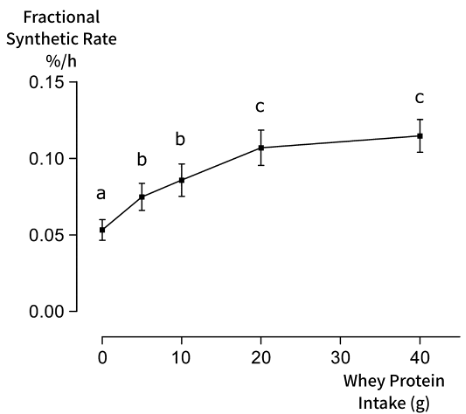
Figure: In young healthy males, MPS increases linearly with leucine intake.15
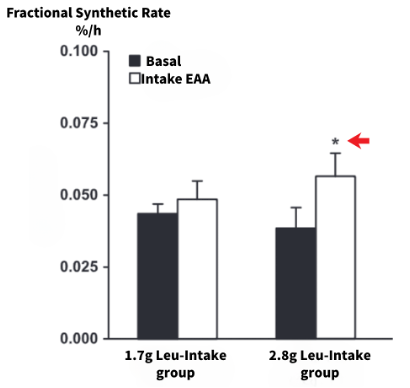
Figure: In older adults, 1.7g leucine has little effect on MPS, while 2.8g triggers a significant response — highlighting the need for higher leucine density.16
Scenario 15: How Female Hormonal Rhythms Affect Muscle Metabolism
Women experience significant fluctuations in estrogen and progesterone throughout their menstrual cycle, and these hormonal shifts play a key role in modulating MPS17.
Estrogen has been shown to upregulate mTOR signaling, thus enhancing protein synthesis. Progesterone, on the other hand, appears to suppress mTOR activity — at least in cellular and animal models. This suggests that the high-estrogen phase (roughly days 10–14 of the cycle, around ovulation) may be a more anabolic period, when women are more likely to benefit from strength training18,19.
After menopause, estrogen levels drop sharply. This raises the activation threshold of mTOR and increases the risk of “anabolic resistance” — a state where the body requires more protein and mechanical stimulus to maintain muscle. Postmenopausal women, therefore, should be especially mindful of pairing resistance training with high-quality protein intake.
It’s worth noting that the effect of progesterone on MPS remains somewhat controversial. Some studies report negligible impact on the mTOR-MPS axis, depending on dosage, exposure time, and overall hormonal context. There is no definitive consensus yet in human clinical research. Thus, rather than rigidly avoiding certain training windows, women are better off adjusting plans based on individual energy, recovery, and body awareness.
Tip:
- For women of reproductive age: schedule high-intensity workouts around ovulation (days 10–14).
- For postmenopausal women: increase protein intake to 1.5–2.2g/kg/day to better stimulate mTOR.
- Tailor nutrition and training plans to your unique hormonal rhythm to maximize muscle retention.
In Summary
Let’s circle back to the four diagnostic questions we posed at the end of the previous article. These can help you assess whether your metabolic environment is supporting or sabotaging your muscle:
- Did I train today (resistance or HIIT)?
- Did I eat enough high-quality protein (≥1.2–1.5g/kg, well distributed)?
- Is my metabolic state healthy (low stress, good sleep, low sugar)?
- Am I in a calorie deficit (16:8 or 5:2 fasting)?
✅ If you answered “no” to two or more of the above, it’s time to go into muscle-preservation mode: Add physical stimulus. Increase protein.Reduce stress. Replenish energy. Make every gram of protein count — use it where your body needs it most.
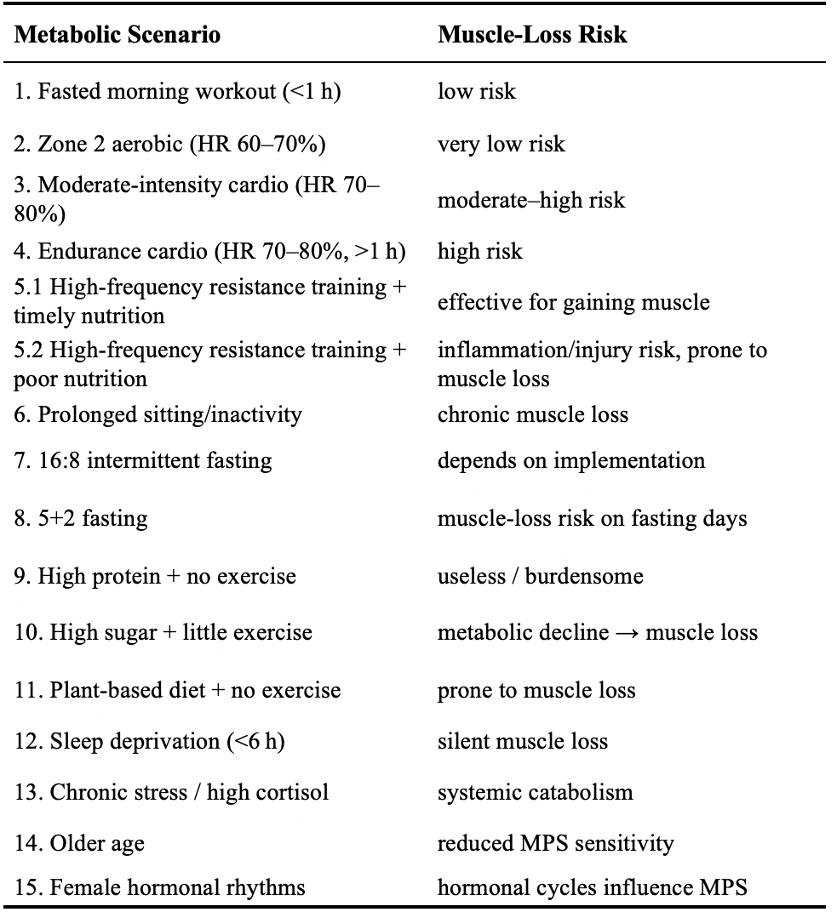
Intervention recommendations are geared toward generally healthy individuals. If you have existing health conditions, always follow your doctor’s instructions.
References19
[1]American College of Sports Medicine. ACSM’s Guidelines for Exercise Testing and Prescription. 11th ed., Wolters Kluwer, 2022.
[2]Clauss, Matthieu, and Jørgen Jensen. “Effect of Exercise Intensity, Duration, and Volume on Protein Oxidation during Endurance Exercise: A Systematic Review and Meta‑Analysis.” Scandinavian Journal of Medicine & Science in Sports, 2025.
[3]van Loon, Luc J. C. “Protein Metabolism during Exercise.” Nutrition & Metabolism, vol. 18, 2021, Article 56.
[4]McGlory, Chris, et al. “Two Weeks of Reduced Activity Decreases Leg Lean Mass and Induces Anabolic Resistance in Older Adults.” Journal of Clinical Endocrinology & Metabolism, vol. 98, no. 6, 2013, pp. 2604‑2612.
[5]Breen, Leigh, and Stuart M. Phillips. “Skeletal Muscle Protein Metabolism in the Elderly: Interventions to Counteract the ‘Anabolic Resistance’ of Ageing.” Nutrition & Metabolism, vol. 8, 2011, Article 68.
[6]Tinsley, Grant M., et al. “Time‑Restricted Feeding plus Resistance Training in Active Females: A Randomized Trial.” American Journal of Clinical Nutrition, vol. 110, no. 3, 2019, pp. 628‑640. PubMed
[7]Tinsley, Grant M., et al. “Time‑Restricted Feeding in Young Men Performing Resistance Training: A Randomized Controlled Trial.” European Journal of Sport Science, vol. 17, no. 2, 2017, pp. 200‑207.
[8]He, Mingqian, et al. “Time‑Restricted Eating with or without a Low‑Carbohydrate Diet Reduces Visceral Fat and Improves Metabolic Syndrome: A Randomized Trial.” Cell Reports Medicine, vol. 3, no. 10, 2022, Article 100777.
[9]Tricò, Domenico, et al. “Early Time‑Restricted Carbohydrate Consumption vs. Conventional Dieting in Type 2 Diabetes: A Randomised Controlled Trial.” Diabetologia, vol. 67, 2024, pp. 263‑274.
[10]American Diabetes Association. “How Food Affects Blood Glucose.” diabetes.org, updated 2025.
[11]Harvie, Michelle N., et al. “The Effect of Intermittent Energy and Carbohydrate Restriction versus Daily Energy Restriction on Weight Loss and Metabolic Disease Risk Markers in Overweight Women.” British Journal of Nutrition, vol. 110, no. 8, 2013, pp. 1534‑1547.
[12]Chu, Brianna, et al. “Physiology, Stress Reaction.” StatPearls, StatPearls Publishing, 2024 (update).
[13]Schakman, Oscar, et al. “The Regulation of Muscle Mass by Endogenous Glucocorticoids.” Molecular and Cellular Endocrinology, vol. 418, 2015, pp. 231‑239.
[14]D’Hulst, Gommaar, et al. “Resistance Exercise Enhances Long‑Term mTORC1 Sensitivity to Leucine.” Molecular Metabolism, vol. 66, 2022, Article 101615.
[15]Moore, Daniel R., et al. “Ingested Protein Dose Response of Muscle and Albumin Protein Synthesis after Resistance Exercise in Young Men.” The American Journal of Clinical Nutrition, vol. 89, no. 1, 2009, pp. 161‑168.
[16]Katsanos, Christos S., et al. “A High Proportion of Leucine Is Required for Optimal Stimulation of the Rate of Muscle Protein Synthesis by Essential Amino Acids in the Elderly.” American Journal of Physiology — Endocrinology and Metabolism, vol. 291, no. 2, 2006, pp. E381‑E387.
[17]Dam, Tine Vrist, et al. “Transdermal Estrogen Therapy Improves Gains in Skeletal Muscle Mass after 12 Weeks of Resistance Training in Early Postmenopausal Women.” Frontiers in Physiology, vol. 11, 2021.
[18]Tse, Margaret C. L., et al. “Estrogen Regulates Mitochondrial Activity Through Inducing Brain‑Derived Neurotrophic Factor Expression in Skeletal Muscle.” Journal of Cellular Physiology, vol. 240, no. 1, 2025.
[19]Van Every, Derrick W., et al. “Hormones, Hypertrophy, and Hype: An Evidence‑Guided Primer on Endogenous Endocrine Influences on Exercise‑Induced Muscle Hypertrophy.” Exercise and Sport Sciences Reviews, vol. 52, no. 4, 2024, pp. 117‑125.