9. At the Crossroads of 40 — Dazed but Unbreakable: My Baseline Health Assessment (Part I)
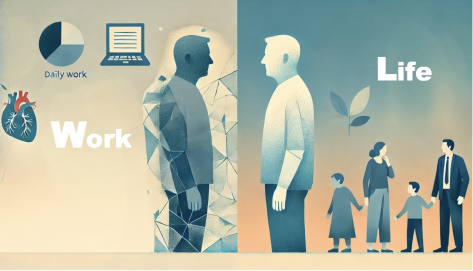
Painted by AI
Forty is a strange age.
We rush through our days on inertia — endless tasks, chronic sleep debt, a hazy blur between effort and exhaustion, as though life is veiled behind frosted glass.
And yet, even in that fog, we keep pushing forward. Shouldering the dual pressures of aging parents and growing kids, we grit our teeth and march on, too afraid to stop.
On the outside, perhaps we’ve learned to appear calm. But deep down, a quiet voice often creeps in:
“Is my body starting to fail me?” “Is it time to pause and reset?”
I, too, find myself at this very crossroads. So today, I want to open up and share my personal baseline health assessment — warts and all — as a template for anyone wondering how to truly understand their current health status.
In previous posts, we explored how to build a comprehensive health baseline. If we look again at the Prime Life framework, we’re currently here (highlighted in orange):
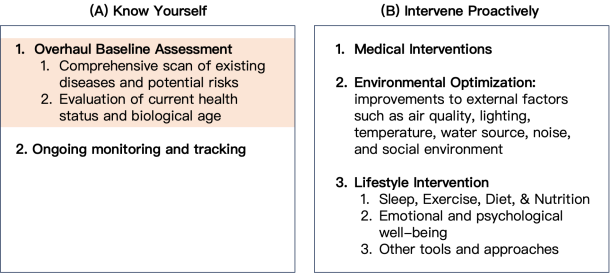
This entry serves as a concrete walkthrough of that system — told through my real-life data from my 2024 baseline exam.
Yes, I’ll be revealing personal medical information. But perhaps that raw honesty is exactly what gives this post its unique value.
There’s a lot to unpack, so this article focuses on just the first part of the baseline process: disease and disease risk screening.
In the next entry, I’ll dive into part two: health status and biological age assessment.
1. Disease & Risk Scanning — Has the damage already begun?
I started by reviewing my annual check-up reports over the past few years, identifying patterns and shifts.
Then I supplemented them with updated tests — comprehensive blood panels, full-body imaging, and whole-genome sequencing.
To make sense of it all, I categorized potential risks into three tiers:
- Level 1: Critical illness, immediate intervention required (e.g., cancer)
- Level 2: Confirmed pathology, needs active medical management (e.g., hypertension)
- Level 3: Early indicators, can be managed via lifestyle (e.g., benign cysts)
Level 1: No major red flags — I’m in the “low-risk” zone (for now)
This is the best news — no immediate threats that require emergency care.
Level 2: Metabolic abnormalities as the main challenge
- Hyperlipidemia (High LDL-C) My LDL-C has consistently hovered between 3.4–3.8 mmol/L, slightly above the reference upper limit (3.35 mmol/L). While I’ve already explored this issue in depth elsewhere, the silver lining is that carotid ultrasound showed no plaque or arterial thickening — suggesting I still have a window for intervention.
- Hyperuricemia (High Uric Acid): My uric acid levels have long stayed in the 430–480 μmol/L range (ideal <420). I’ve never had gout symptoms, but this still points to increased metabolic load.
- Thyroid Nodule (TI-RADS Category 3) A benign-appearing nodule in the right thyroid lobe. No symptoms for now, but it needs continued observation.
- Elevated TPO-Ab (Thyroid Peroxidase Antibodies) A marker often excluded from standard thyroid panels but included in extended ones. All other thyroid markers are normal, but this one’s trending up — suggesting early-stage Hashimoto’s thyroiditis (a mild autoimmune reaction). Over time, this may affect thyroid structure and function.
Level 3: Mild signs of wear and tear
- Spinal Issues Minor thoracic spine degeneration and reduced lumbar bone mass — likely related to sedentary posture and confirmed by low Vitamin D levels found later.
- Benign Cysts Small cysts in the liver and prostate — common, non-threatening findings; just need routine follow-up.
- White Matter Lesions in Frontal Lobe (Fazekas Grade 1) Mild white matter change, unusually early for my age. Likely linked to microcirculation impairment, high LDL-C, and my habit of staying up very late (which is surprisingly damaging to brain white matter).
- Prostate Enlargement A classic age-related change driven by shifts in testosterone levels. The distinction between Level 2 and Level 3 here lies in subjective symptoms — such as frequent urination or nighttime wake-ups — and abnormal PSA values. For now, both PSA and f-PSA levels are normal, and symptoms minimal. No need for medical treatment yet — just regular monitoring.
- Subpleural Fibrosis CT scan revealed thin fibrotic bands beneath the pleura, likely scarring from past infections. No intervention needed.
2. Full-Body Imaging: Cancer Screening + Brain & Fat Assessment
My imaging regimen included:
- Full-body multi-region MRI
- Low-dose spiral CT (lungs)
- Ultrasound (thyroid, carotids)
- DEXA scan (bone density)
I’d done an endoscopy 18 months prior with no issues, so I skipped it this time.
Summary of imaging results:
- No malignant tumors found
- Thyroid nodule (as above)
- Small liver cysts — benign
- Healthy cerebral arteries and hippocampus
- Tiny white matter lesion (Fazekas Grade 1)
- Excellent visceral fat metrics
Beyond cancer screening, the brain MRI gave valuable insight into early warning signs for strokes and Alzheimer’s — none detected. However, the white matter lesion suggests I need to pay more attention to sleep and circulation.
As for body fat, MRI remains the gold standard. My VAT Index (visceral fat volume/height²), VAT Ratio (visceral vs. total fat), and liver fat levels were all within optimal range.
3. Whole-Genome Sequencing: Mapping Genetic Susceptibilities
Over 1,500 genes were analyzed for both monogenic disease risks and polygenic predispositions.
Monogenic (Hereditary Disease Risk)
None detected.
Polygenic Risk
- Elevated LDL-C: 1.3x risk
- Gout: 2x risk
- Rheumatoid Arthritis: 2.1x risk
These matched my blood test results well. RA hasn’t shown any symptoms yet, but I’ve added it to my watch list.
Other curious gene traits:
- Higher risk of Achilles tendinitis — I did suffer a mild case after ramping up exercise
- Likely deficiencies in Vitamin D and B6 — confirmed later in my health assessment
Genetic risk doesn’t equal fate. But it can be a powerful lens through which to interpret patterns and design preventive strategies.
4. Risk Assessment: “The Five Horsemen of Death”
Drawing on all the data, I helped myself on a self-assessment across the Five Horsemen: Cardiovascular and cerebrovascular diseases, Cancer, Respiratory system diseases, Neurodegenerative diseases, and Metabolic disorders (e.g., Type 2 Diabetes).
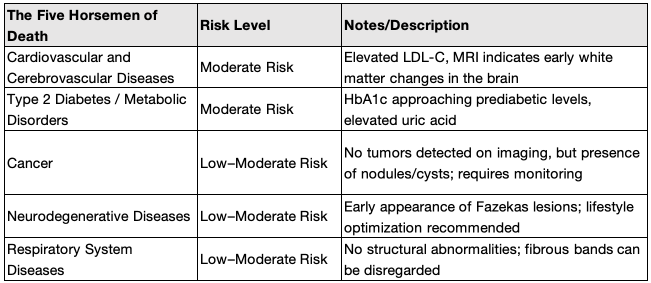
No confirmed diagnoses — yet. But early warning signs are showing up across the board.
And that’s the beauty of a baseline exam: catching these trends before they become problems.
In Summary
The clearest signal from my body?
Metabolic stress.
Here’s what the data tells me:
- My metabolic system (LDL-C, uric acid) is the core area of concern
- Immune signals (thyroid) show mild irregularities
- Early signs of neural and skeletal aging are beginning to surface
But the good news?
Every one of these is still reversible.
With timely intervention, I can delay chronic diseases and extend the curve of my healthspan.
This wraps up Part I of my personal baseline check. In Part II, I’ll share how I evaluated my overall health and biological age.