If Zone 2 is the “entry-level essential” on the Prime Life workout list, then HIIT is the “advanced custom edition.”
It’s designed to give your VO₂Max and cardiovascular capacity a rapid boost — and deliver the most dramatic training returns in the least amount of time. But if you dive in unprepared, the outcome is often predictable: it’s either your knees or your willpower that gives out first.
This article is a HIIT beginner’s checklist: SELF-EVALUATION + SAFETY MANUAL.
The two checklists below draw heavily from The HIIT Bible: Supercharge Your Body and Brain Explained by Steve Barrett 1.
I. Pre-HIIT Health Screening: Six Non-Negotiables
Before you strike the match, make sure the fuel tank won’t explode. These six questions are your medical red lines:
- Have you ever experienced chest pain?
- Has a doctor ever told you that you should only perform specific types of exercise?
- Are you currently on medication for high blood pressure or heart disease?
- Have you ever experienced dizziness, loss of balance, or even fainting?
- Do you suffer from joint or skeletal issues that worsen with exercise (back, knees, shoulders, elbows, wrists, etc.)?
- Are you aware of any other medical conditions that would make exercise unsafe for you?
If you answer “Yes” to any of the above, stop here. Consult a sports physician or rehab expert for a personalized exercise prescription.
It doesn’t necessarily mean HIIT is off-limits — but it does mean you need clarity on your current safe intensity zones.
A few special reminders:
- If your family has a history of cardiopulmonary diseases (like hypertension, heart disease, asthma, angina), even if you answered “No” to all six, proceed with extra caution. A doctor’s input is still advisable before jumping into HIIT.
- Cardiovascular conditions are common in midlife and beyond. If you’re over 50, consider getting a cardiopulmonary checkup before starting.
Passed this round? Great — on to the next self-assessment.
II. HIIT Readiness: Seven Reality Checks
Being “medically clear” ≠ “physically ready.” Ask yourself:
- Do you struggle to complete at least 20 minutes of Zone 2 training comfortably?
- Are you in a prolonged calorie deficit (e.g., long-term dieting, low energy availability)?
- Do you consistently drink less than 1 liter of water per day?
- Is your body extremely stiff with limited flexibility?
- Is your current body weight making exercise particularly strenuous?
- Are you suffering from chronic sleep deprivation?
- Does the feeling of breathlessness and sweat make you dread workouts?
If your answer to several of these is “Yes,” hold off on HIIT for now.
The good news? Most of these can be dramatically improved without medical intervention.
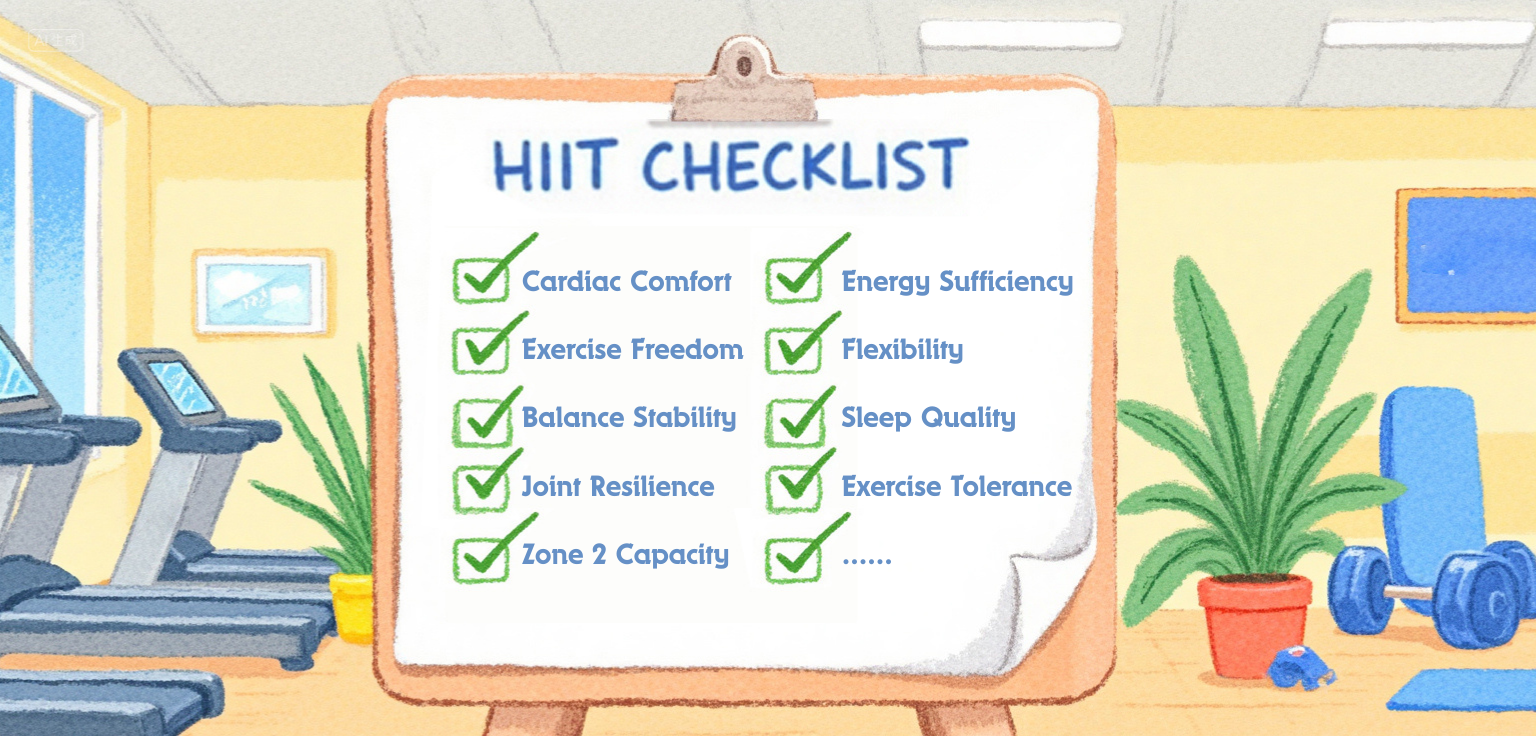
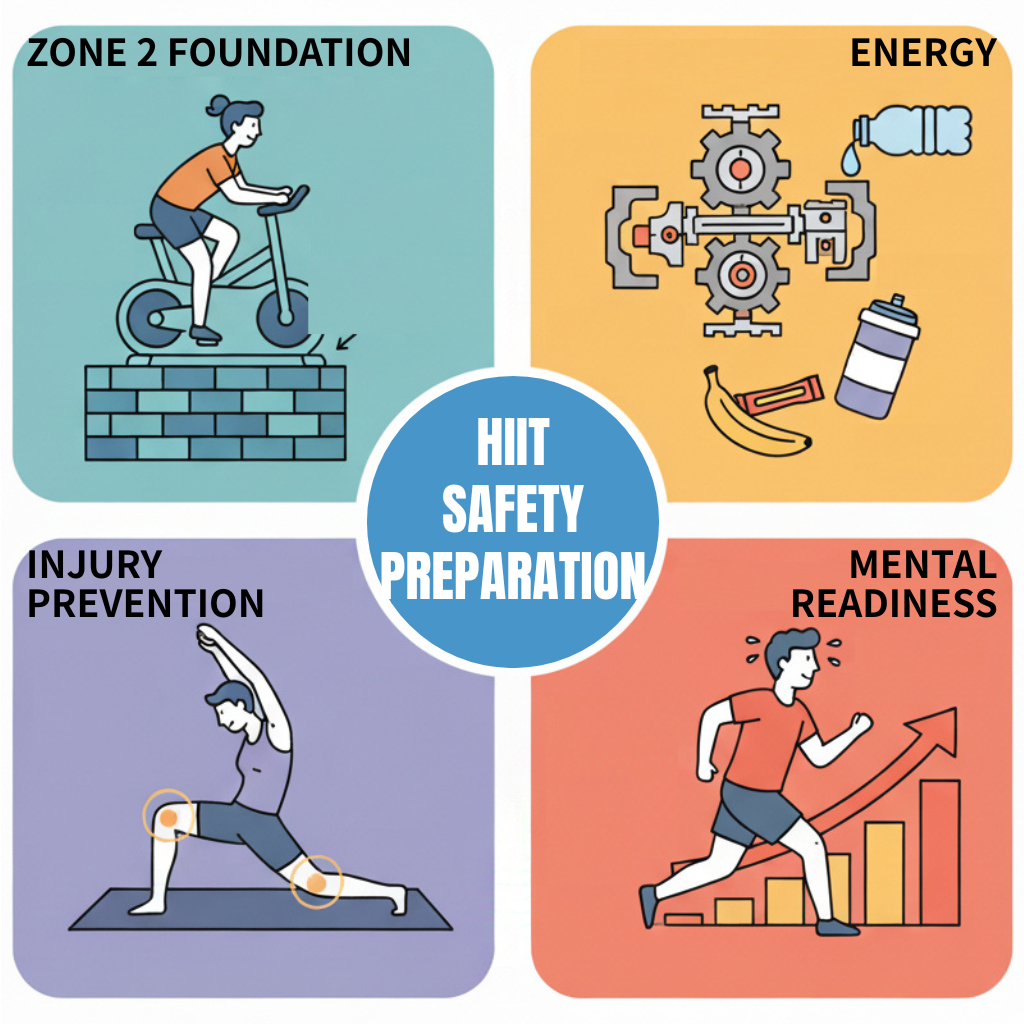
1️⃣ Build Your Zone 2 Foundation
Zone 2 is the foundation on which HIIT is built. And 20 minutes is just the bare minimum.
If you’re starting from scratch, my advice is to spend 3–6 months building up to:
- 150 minutes of Zone 2 per week
- 30–60 minutes per session, comfortably sustained
Why this progression matters [2–5]:
- Habit formation: Zone 2 is enjoyable, low-strain, and quick to recover from — making it ideal for building consistency.
- Gradual adaptation: Only when you hit 150 min/week + 30–60 min/session can you fully unlock Zone 2’s benefits on mitochondrial health, fat metabolism, and metabolic flexibility.
- Beginner-friendly gains: Even without HIIT, Zone 2 alone can significantly improve VO₂Max in untrained individuals.
- Positive feedback loop: Transitioning to HIIT from a solid Zone 2 base makes the process feel less painful and more rewarding.
- Time economy: 150 minutes/week is already a solid commitment. Starting with a gentle routine makes it easier to integrate movement into your life — sustainably.
2️⃣ Fuel and Hydrate
HIIT + Hunger = Double Damage.
The International Olympic Committee has identified RED-S (Relative Energy Deficiency in Sport) as a syndrome that affects both male and female athletes. It can impair hormonal, bone, immune, and psychological health. After high-intensity efforts like HIIT, restoring energy should be your priority [6–8].
Don’t combine HIIT with fasting or heavy caloric restriction — those are advanced longevity strategies you should shelve for later. Without adequate recovery, injury risk skyrockets.
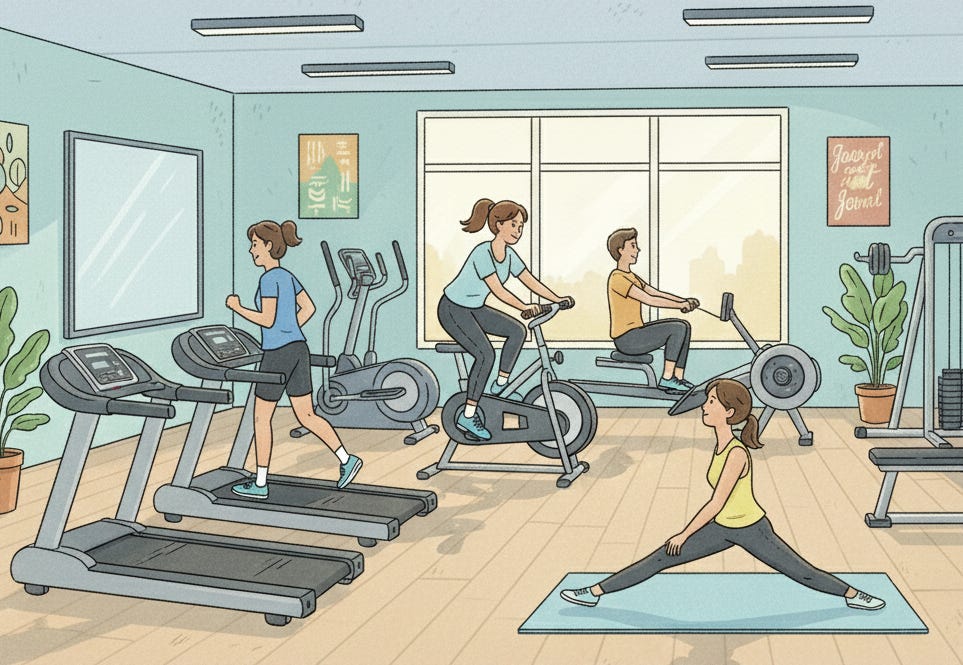
HIIT + Dehydration is like running a high-performance engine without oil. Blood flow slows, energy delivery tanks, and risks escalate — from dizziness to cramps, even heatstroke. Drinking enough water is your cheapest form of workout insurance.
Painted by AI
3️⃣ Injury-Proof Your Body
- Lack of flexibility: Stiff joints and muscles are primed for injury when pushed hard.
- Fix: Dynamic stretching and core activation are your warm-up essentials. Yoga and Pilates can also enhance mobility.
- Excess weight: Jumping and sprinting put multiple times your body weight on your joints — imagine a heavy truck on a fragile bridge.
- Fix: Use Zone 2 to reduce weight, and build lower-body strength before high-impact moves.
- Sleep deprivation: Poor sleep impairs reaction time, proprioception, and muscle recovery. It’s like driving without brakes or screws — your injury risk spikes.
NCAA studies show that each additional hour of sleep cuts injury risk by about 43% the next day. The consensus for adults: ≥7 hours per night. Athletes need even more 9.
- Fix: Treat sleep as part of your training. If you’ve had a bad night, skip HIIT. Do Zone 2 or flexibility training instead.
4️⃣ Mental Readiness: Can You Embrace Discomfort?
HIIT is painful — real pain. Not just gasping for breath or dripping sweat, but DOMS (Delayed Onset Muscle Soreness) is almost guaranteed 11. Sometimes DOMS and real injuries are hard to tell apart.
The American College of Sports Medicine once warned that overly aggressive workouts may deter people from exercising altogether 12.
But flip the perspective: soreness is a signal of growth.
If you can reframe HIIT discomfort as an upgrade cue, you’re mentally ready to enjoy the time-efficiency rewards of HIIT — faster gains in less time.
Getting proper coaching and rehab support is a mature move. It keeps you from being derailed by false alarms or real setbacks.
Painted by AI
III. A Good Coach Can Change A Lot
If you’ve made it through both checklists, you’ve probably realized that HIIT isn’t plug-and-play.
The underlying science is teachable — but the practice is deeply personal.
That’s where a solid coach comes in. They can:
- Assess your readiness and tailor your intensity zones
- Guide your warm-ups, activations, and cooldowns to avoid injury
- Make workouts more fun, less tedious
- Help you navigate the crucial first 3 months and avoid dead ends
- Give you a sense of community and accountability
With a coach, HIIT stops being a lonely grind. It becomes a safe, repeated push toward your personal edge.
And don’t overlook the importance of a rehab specialist. For middle-aged person who works out, injuries are practically a rite of passage. Knowing how to recover fast and prevent small issues from becoming chronic damage lets you make the most of supercompensation.
And One More Thing: Supercompensation Is Real
A common mistake: Feeling good after a few HIIT sessions, so you ramp up volume too soon — without enough recovery. That leads to overtraining.
Real growth happens during rest.
This isn’t just philosophy. It’s the science of supercompensation 13,14:
After stimulus, the body doesn’t just return to baseline — it adapts to a higher level, if you give it enough recovery.
That’s why they say:
“Muscles are torn in the gym, fed in the kitchen, and built in bed.”
Skip recovery, and here’s what you get:
- Declining strength and power
- Weakened immunity, frequent illness
- Elevated resting heart rate, poor sleep
- Chronic fatigue, lost motivation
To reap the rewards of supercompensation after HIIT, focus on these three:
- Nutrition: Within 30–60 mins post-workout, consume whey protein + moderate carbs to speed up repair and build muscle (yes — HIIT can build muscle, especially fast-twitch fibers!) 15,16.
- Sleep: 7 hours is the bare minimum; beginners may need even more 10.
- Frequency: 2–3 HIIT sessions per week, spaced at least 48 hours apart. More is not better [17–19].
In Summary
Zone 2 is your foundation. HIIT is your skyscraper. Build without a foundation, and you’re headed for collapse.
Only when you’ve laid that foundation, replenished your energy and fluids, maintained flexibility, optimized body weight, and prioritized sleep — combined with proper warm-ups, cooldowns, recovery, and training frequency — can HIIT truly become your “advanced reward” in the longevity playbook.
Don’t forget to find yourself a good strength coach and rehab partner — especially for those crucial first three months.
Remember: HIIT is not a shortcut. It’s a powerful lever — but only when you’re ready.
If you’re ready, HIIT will break your ceilings. If you’re not, it might break you.
So… are you ready for injury-free HIIT?
Intervention recommendations are geared toward generally healthy individuals. If you have existing health conditions, always follow your doctor’s instructions.
References
[1]Barrett, Steve. The HIIT Bible: Supercharge Your Body and Brain, 2017.
[2]Bull, Fiona C., et al. World Health Organization 2020 Guidelines on Physical Activity and Sedentary Behaviour. World Health Organization, 2020.
[3]Ekelund, Ulf, et al. “Dose–response associations between accelerometry measured physical activity and sedentary time and all cause mortality: systematic review and harmonised meta-analysis.” BMJ, 2019;366:l4570.
[4]Vieira, Alexandra Ferreira, et al. “Effects of Aerobic Exercise Performed in Fasted v. Fed State on Fat and Carbohydrate Metabolism in Adults: A Systematic Review and Meta-analysis.” British Journal of Nutrition, vol. 116, no. 7, 2016, pp. 1153–1164.
[5]Rothschild, Joshua A., et al. “What Should I Eat before Exercise? Pre-Exercise Nutrition and the Response to Endurance Exercise: Current Perspectives and Future Directions.” Nutrients, vol. 12, no. 11, 2020, article 3473.
[6]Mountjoy, Margo, et al. “IOC Consensus Statement on Relative Energy Deficiency in Sport (RED-S): 2018 Update.” British Journal of Sports Medicine, vol. 52, no. 11, 2018, pp. 687–697.
[7]Mountjoy, Margo, et al. “2023 International Olympic Committee’s (IOC) Consensus Statement on Relative Energy Deficiency in Sport (REDs).” British Journal of Sports Medicine, vol. 57, no. 17, 2023, pp. 1073–1097.
[8]International Olympic Committee. IOC REDs Clinical Assessment Tool — Version 2 (IOC REDs CAT2). 2023.
[9]Watson, Andrew, et al. “Decreased Sleep Is an Independent Predictor of In-Season Injury in Male Collegiate Basketball Players.” Orthopaedic Journal of Sports Medicine, vol. 8, no. 11, 2020.[10]Watson, Nathaniel F., et al. “Recommended Amount of Sleep for a Healthy Adult: A Joint Consensus Statement of the American Academy of Sleep Medicine and Sleep Research Society.” Journal of Clinical Sleep Medicine, vol. 11, no. 6, 2015, pp. 591–592
[11]Cheung, Karoline, et al. “Delayed Onset Muscle Soreness: Treatment Strategies and Performance Factors.” Sports Medicine, vol. 33, no. 2, 2003, pp. 145–164.
[12]Powell, Kenneth E. “High-Intensity Interval Training: For Fitness, for Health or Performance?” American College of Sports Medicine, 16 Aug. 2019, acsm.org/high-intensity-interval-training-fitness/.
[13]Buchheit, Martin, and Paul B. Laursen. “High-Intensity Interval Training, Solutions to the Programming Puzzle — Part II: Anaerobic Energy, Neuromuscular Load and Practical Applications.” Sports Medicine, vol. 43, no. 10, 2013, pp. 927–954.
[14]Hatfield, Frederick C., and William J. Kraemer. “Evidence-Based Practice for Periodization and Programming.” Strength & Conditioning Journal, 2019.
[15]Jäger, R., et al. “International Society of Sports Nutrition Position Stand: Protein and Exercise.” Journal of the International Society of Sports Nutrition, vol. 14, 2017, Article 20.
[16]Kerksick, C. M., et al. “International Society of Sports Nutrition Position Stand: Nutrient Timing.” Journal of the International Society of Sports Nutrition, vol. 14, 2017, Article 33.
[17]García-Pinillos, Felipe, et al. “How Does High-Intensity Intermittent Training Affect Recreational Endurance Runners? Systematic Review.” Journal of Sport and Health Science, 2016.
[18]Buchheit, Martin, and Paul B. Laursen. “High-Intensity Interval Training, Solutions to the Programming Puzzle — Part I & II.” Sports Medicine, 2013.
[19]American College of Sports Medicine. “Physical Activity Guidelines.”
[20]AI Research