47. A Longevity Dialogue with Harvard Friends — and More (Part 2): Practical Anti-Aging Tips
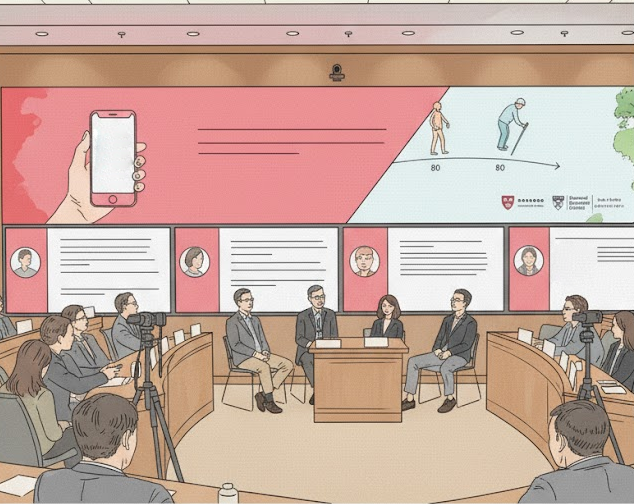
Painted by AI
As I mentioned in the previous article, recently, I was invited to speak at a longevity and anti-aging panel hosted jointly by Harvard Club of Beijing and Harvard Business School Beijing Club.
I’ve distilled this event into two written entries: a “highlight reel” of the conversation, laced with my own reflections, extensions, and related content from the Prime Lab journey — both what we’ve shared and what’s to come.
The first piece focused on heory, cutting-edge science, and the philosophy of longevity. This second one dives into practical tips, anti-aging tools, and lifestyle interventions.
The following Q&A doesn’t track names or direct quotes. Instead, I use each question as a springboard for sharing my own thinking. These reflections don’t necessarily represent the other panelists’ views.
Q7: How should we approach anti-aging? Should young people even bother?
My answer: Absolutely.
“Anti-aging” doesn’t mean stacking cutting-edge therapies. It means getting the fundamentals right: eating well, sleeping well, moving well, and maintaining a healthy mindset. These four are all solid, well-evidenced longevity levers.
That said, if “anti-aging” is interpreted as dabbling in unproven interventions or piling on supplements, I would urge most people to take a cautious, conservative approach.
Not because I dismiss the potential of new therapies or supplements — but because, in reality, human clinical trials that directly target “slowing aging” or “extending healthspan” are still scarce. Most interventions are backed by mechanisms, animal data, or surrogate endpoints (like metabolic markers, inflammation levels, or biological age clocks), but not hard evidence of lifespan extension. The human body is a deeply coupled and complex system. What seems promising in theory may not pan out in practice — and carries unknown risks.
Put differently, “aggressive anti-aging protocols” actually demand an unusually high level of information filtering and risk management. I call this skill “informational aesthetics” — the ability to navigate a flood of uncertain data, making thoughtful decisions based on evidence grading, risk-benefit balance, replicability, measurability, and personal relevance.
The most serious practitioners, even if they hold “radical” views, often act in surprisingly “conservative” ways: starting with micro-doses, testing one variable at a time, setting clear stop-loss points, and using objective tracking metrics. This restraint is the fruit of deep research and meticulous risk assessment. For most people, it’s better to take things slow — and wait for more solid science.
From all we’ve researched and practiced at Prime Lab, the two most reliable, high-certainty levers for extending healthspan are:
1️⃣ Treat disease first — clear the landmines.
Any untreated or poorly managed condition — cardiovascular disease, metabolic disorders, cancer, sleep apnea, depression, anxiety — can dramatically reduce your healthspan. A comprehensive baseline exam and cancer screening (blood pressure, lipids, fasting glucose/HbA1c, liver/kidney/thyroid/iron/Vitamin D/inflammation markers, sleep apnea screening, tumor markers, etc.) is the foundation of your anti-aging architecture[27–29].
2️⃣ Treat your lifestyle as a powerful, high-safety therapeutic tool.
- Nutrition: Caloric moderation, macronutrient balance, and limit free sugars.
- Exercise: ≥150 minutes/week of Zone 2 cardio + 2–3 resistance training sessions; occasional HIIT if needed.
- Sleep: Consistent wake-sleep anchors, good sleep hygiene, and sleep disorder screening if necessary.
- Mental health: Build resilience mechanisms (mindfulness, breathwork, meditation, social support) to keep stress in an adaptive range.
If you nail just these two pillars, you’re already ahead of 95–99% of your peers.
Only after this solid groundwork should you consider “advanced interventions” like cutting-edge therapies, longevity compounds, or supplements — and even then, only with medical supervision, tracking protocols, and the principles of small-step trials, single-variable testing, safety-first, and clear failure points. Or you can simply leave these trials to scientists and enjoy the high-certainty outcomes they eventually deliver.
For young people: the earlier you start compounding, the better.
If you build consistent sleep, diet, exercise, and mindset routines in your 20s–40s, they’ll pay off in your 50s–70s with lower chronic disease risk and a smoother aging curve. So yes, young people should practice “anti-aging” — but not in the form of trendy hacks. It’s more like a long-term discipline of living well[30–32].
For more on this theme, see: In·Sight | Great Things Take Time: A Letter to the Impatient (Including Myself).
If your direction is right, your pace steady, and your tracking in place — that alone is a supercharged anti-aging strategy.
Q8: Are there any anti-aging “life hacks” in daily habits?
Dr. Xiaowei summed it up brilliantly:
Eat. Sleep. Move. De-stress.
I couldn’t agree more. These four deceptively simple elements basically cover the entire logic tree of longevity.
🧬 A Harvard study: Long life leaves clues.
The Million Veteran Program, one of the largest genetic and health databases in the U.S., found that if you start practicing eight healthy lifestyle habits by midlife — nutritious diet, regular exercise, good sleep, effective stress relief, no smoking, moderate alcohol, no opioid abuse, and active social life — men could live 24 years longer, and women 20.5 years longer, compared to those who didn’t1.(Note: Model-based estimation and correlational analysis, not a causal trial.)
Yes — those much-discussed “extra 20 years” can already be achieved through lifestyle alone.
So Dr. Xiaowei’s “four words” are actually a localized and streamlined version of those eight principles — perfect for daily life.
🍽 Eat: Food is your most subtle biological code.
Nutrition is highly complex and individualized. But in modern societies, caloric excess is the default. So mild caloric restriction is our universal recommendation2.
Just a 5–10% energy deficit can significantly boost metabolic sensitivity, mitochondrial efficiency, and anti-inflammatory resilience3.
Beyond that, macronutrient balance is more important than just counting calories.
At Prime Lab, we say: “Macro balance ≈ long-term metabolic homeostasis.” (See our previous article Overview | You Eat Over a Ton Each Year — Getting It Right Is the First Step to Longevity.)
🏃♂️ Move: Exercise is the most powerful longevity drug.
Exercise is a rare lifestyle lever that offers drug-level effects with virtually zero side effects. It simultaneously enhances cardiovascular, muscular, metabolic, and neuroplastic function.
The foundational protocol:
- Zone 2 cardio (≥150 min/week): boosts mitochondria, stabilizes metabolism, preserves lean mass.
- Resistance training (2–3×/week): maintains muscle mass, bone density.
- HIIT (optional, minimal): increases VO₂max, enhances metabolic flexibility.
To make it more sustainable and fun, consider racquet sports (tennis, badminton, ping pong). These integrate cardio, coordination, reflexes, and social bonding — and multiple studies show they significantly reduce all-cause mortality35,36.
Always follow strength training with adequate protein to maximize muscle protein synthesis.
😴 Sleep: Your circadian rhythm is the master switch.
Sleep isn’t just about rest. It anchors your circadian rhythm, which governs daily metabolism, hormones, and cognitive function.
Lack of sleep = higher cortisol, lower insulin sensitivity. Sleeping and waking late disrupt melatonin production, delaying both exercise and meal timing4.
The healthy rhythm is a feedback loop:
Early sleep → Early wake → Morning light → Movement → Stable sleep
Micro-interventions to improve sleep:
- Avoid meals within 4 hours of bedtime.
- Avoid intense exercise 2–4 hours before sleep.
- Avoid screens 2 hours before bed.
- Keep bedroom cool (18–24°C).
- Ensure darkness and quiet.
We’ll explore this deeper in a future Prime Lab article on sleep and longevity.
🔥 Stress: It’s not always the enemy.
Yes, chronic stress accelerates aging — via elevated cortisol, immune suppression, and telomere damage.
But acute, recoverable stress — a.k.a. hormesis — is a vital activator of resilience. It’s a “hormetic response”: temporary discomfort that strengthens long-term function5.
Examples:
- Intermittent fasting or mild caloric deprivation → activates AMPK and autophagy6.
- Cold exposure → increases brown fat and mitochondrial efficiency7.
- Coffee/Polyphenolic phytochemicals → micro-toxicity triggers antioxidant defense8.
- Near-lactate-threshold workouts → promotes mitochondrial biogenesis9.
The key is the right dose. Too much breaks you. Too little makes you fragile. Gentle but persistent stressors wake the body up — again and again.
Eat balanced. Move smart. Sleep steady. Stress just right.
These four elements form the operating system of Prime Life. Amid the flashy waves of anti-aging tech, they remain the steadiest, most compounding path of all.
Q9: As investors and entrepreneurs, how do you manage stress? Should we avoid high-stress jobs for the sake of longevity?
Not all stress is harmful.
When challenges are manageable and paired with positive feedback, they become what psychologists call “eustress” — good stress.
This kind of pressure sharpens focus, boosts dopamine and norepinephrine, and brings us into a state of high performance and deep enjoyment. Psychologists call this flow. In flow, we feel alive, purposeful, and fully engaged10.
From a longevity perspective, flow isn’t just a nice-to-have — it’s a regenerative state. It brings clarity, autonomy, and fulfillment.
Biologically, flow stabilizes the balance between sympathetic and parasympathetic activity, helping reduce the harmful cortisol surges that come with chronic stress. In fact, it may be better for anti-aging than avoiding stress altogether.
So stress itself isn’t the problem — it’s how we relate to it.
This is what the classic ABC model in psychology explains11:
- A (Activating Event): External situations — like a tough project, financial stress, or startup chaos.
- B (Belief): Our interpretations, beliefs, and narratives about these events.
- C (Consequence): Our emotional and behavioral responses.
Most people believe A → C. “My job is exhausting, so I’m anxious.”
But the real causal chain is A → (through B) → C.
It’s not the event, but our belief systems — our “B” — that shape the outcome.
When we reshape B — our values, narratives, and mental frameworks — we experience totally different emotional curves under the same conditions. This is psychological resilience: turning pressure into fuel, not damage.
And when your B is resilient enough, C (your feelings) becomes calm and clear — and eventually, you start reshaping A (your environment) too. You stop seeing your surroundings as hostile and begin turning them into allies for growth.
This, at its core, is what it means to have human agency. Human civilization itself is a long journey of transforming our B — from fearing nature, to understanding it, to reinventing it.
There are many tools to strengthen B. Positive psychology, mindfulness, meditation, and breathwork are not spiritual fluff — they’re technologies for recalibrating your nervous system. Studies show they enhance prefrontal cortex function and reduce amygdala reactivity[12–14].
So instead of fleeing stress, learn to dance with it.
True longevity isn’t a life free of stress — it’s a life where you can stay in flow, even under pressure.
Q10: Can I drink coffee?
Of course.
In moderation, coffee is not only safe — it’s a plus for longevity.
Large-scale epidemiological studies (Harvard, JAMA, NEJM) show that 2–3 cups of black coffee a day are linked to lower all-cause mortality and reduced risk of metabolic diseases15.
The key: moderation and purity. Skip the sugar-loaded milk coffee; stick to black coffee or add just a splash of milk.
Want to take it a step further? Add a pinch of turmeric (curcumin) or cinnamon (cinnamaldehyde). Both have anti-inflammatory and insulin-sensitizing properties16,17.
Caffeine-sensitive? Decaf offers similar longevity benefits — yes, even without the buzz.
Q11: What’s the right way to take supplements?
Personalization is everything.
More is not better. Smart supplementation follows a loop: testing → assessment → adjustment → retesting.
Each person’s baseline is different. Genetics, diet, lifestyle (sun exposure, stress, sleep) all affect your micronutrient needs.
A proper supplement strategy includes:
- Baseline testing: Blood panels, micronutrients, fat-soluble vitamins, Omega-3 index.
- Targeted supplementation: Start with deficiencies — not trends.
- Dynamic tracking: Check effectiveness, adjust dosage, watch for interactions.
Supplements often have weak subjective signals — so without periodic bloodwork, it’s hard to tell what’s working. That’s why many people give up. Taking a bunch of pills without objective tracking just places you in unknown-risk territory.
Still, there are safe, broadly useful starting points.
Two common gaps:
- Vitamin D: Low sun exposure + indoor lifestyle = widespread deficiency.
- Omega-3 fatty acids: High Omega-6 diets skew the Omega-6:3 ratio.
Both are well-supported, low-risk supplements — ideal for beginners.
We’ll publish a full Prime Lab guide soon on which supplements are evidence-based — and which are just expensive hype.
Q12: How do we balance the benefits and harms of sun exposure?
Sunlight is a double-edged sword.
On one hand, moderate exposure helps synthesize vitamin D, uplifts mood, and regulates the circadian rhythm. On the other, excessive UV radiation is a major contributor to skin cancer and photoaging.
According to the World Health Organization (WHO), the International Agency for Research on Cancer (IARC), and the American Cancer Society (ACS)[19–20]:
Artificial UV radiation devices are used to treat certain medical conditions such as vitamin D deficiency and psoriasis. However, such treatment should only be carried out under medical supervision. For the majority of the population, incidental exposure to the sun, combined with dietary intake of vitamin D, provides adequate vitamin D throughout the year.
A safer approach includes:
- Getting short daily exposures (10–20 minutes) of natural sunlight through everyday activities;
- Taking oral vitamin D3 supplements to maintain healthy serum 25(OH)D levels;
- Applying sunscreen consistently during peak UV hours (10 a.m. to 4 p.m.).
It’s also worth noting:
The key to sunlight’s circadian benefits isn’t UV absorption through the skin — it’s light detection through the eyes.
Within 10 minutes of waking, looking at outdoor natural light (without directly staring at the sun) triggers retinal ganglion cells → suppresses melatonin → synchronizes your internal clock. This doesn’t conflict with sun protection — in fact, you can (and should) do both21,22.
Q13–1: Is cardio alone enough? Do I really need to do strength training too? / Q13–2: I love lifting and feel great doing it. Do I still need cardio?
Both are essential — and highly complementary[23–25].
- Cardio (Zone 2 training): Improves mitochondrial function, insulin sensitivity, and cardiovascular health.
- Strength training: Preserves muscle mass, bone density, and basal metabolic rate.
- A small dose of HIIT: Boosts VO₂max and enhances metabolic flexibility.
If you’re a die-hard lifter or a cardio enthusiast, that’s great — but don’t ignore the other half of the equation.
Lifting powers up your “engine”, while Zone 2 trains your “battery.” One builds force, the other sustains energy.
Only when both systems are tuned can your body become truly efficient and durable.
Q14: Since sugar is so harmful, can I cut it out entirely?
Free sugars — which include added sugars, syrups, and sugars in sweetened beverages — can and should be brought as close to zero as possible26.
They spike blood glucose and insulin, trigger chronic inflammation, promote fat accumulation, and even indirectly raise LDL-C, contributing to arterial plaque and the world’s top killer: cardiovascular disease33,34.
But carbohydrates as a whole aren’t the enemy.
They’re one of the three essential macronutrients — and the primary energy source for your brain and red blood cells.
The key is to:
- Choose low-GI, fiber-rich complex carbs (whole grains, legumes, root vegetables);
- Match your total daily carb intake to your activity level;
- Avoid refined sugars and ultra-processed foods.
Intervention recommendations are geared toward generally healthy individuals. If you have existing health conditions, always follow your doctor’s instructions.
References
[1]Nguyen XT, et al. Impact of 8 lifestyle factors on mortality and life expectancy among United States veterans: The Million Veteran Program. Am J Clin Nutr. 2024 Jan;119(1):127–135.
[2]World Health Organization. “Obesity and Overweight.” 7 May 2025.
[3]Magkos, Faidon, et al. “Effects of Moderate and Progressive Weight Loss on Metabolic Function in Obesity.” Cell Metabolism, 2016.
[4]Spiegel, Karine, et al. “Impact of Sleep Debt on Metabolic and Endocrine Function.” The Lancet, vol. 354, 1999, pp. 1435–1439.
[5]Calabrese, Edward J., and Linda A. Baldwin. “Hormesis: The Dose-Response Revolution.” Annual Review of Pharmacology and Toxicology, vol. 43, 2003, pp. 175–197.
[6]Wszołek, Agata, and Wojciech Żwierełło. “The Role of Intermittent Fasting in the Activation of Autophagy Processes in the Context of Cancer Diseases.” International Journal of Molecular Sciences, vol. 26, no. 10, 2025, Article 4742.
[7]van Marken Lichtenbelt, Wouter D., et al. “Cold-Activated Brown Adipose Tissue in Healthy Men.” The New England Journal of Medicine, vol. 360, no. 15, 2009, pp. 1500–1508.
[8]Lonati E, et al. Coffee-Derived Phenolic Compounds Activate Nrf2 Antioxidant Pathway in I/R Injury In Vitro Model: A Nutritional Approach Preventing Age Related-Damages. Molecules. 2022 Feb 3;27(3):1049.
[9]Little, Jonathan P., et al. “An Acute Bout of High-Intensity Interval Training Increases the Nuclear Abundance of PGC-1α and Activates Mitochondrial Biogenesis in Human Skeletal Muscle.” American Journal of Physiology — Regulatory, Integrative and Comparative Physiology, vol. 300, no. 6, 2011, pp. R1303–R1310.
[10]van der Linden, Dimitri, et al. “Go with the Flow: A Neuroscientific View on Being Fully Engaged.” Brain and Behavior, 2020, Article e01947.
[11]Ellis, Albert. “The Revised ABC’s of Rational-Emotive Therapy (RET).” Journal of Rational-Emotive & Cognitive-Behavior Therapy, vol. 9, no. 3, 1991, pp. 139–172.
[12]Kral, Tammi R. A., et al. “Impact of Short- and Long-Term Mindfulness Meditation on Brain and Physiology.” Science Advances, vol. 4, no. 10, 2018, eaao4987.
[13]Hölzel, Britta K., et al. “Mindfulness Practice Leads to Increases in Regional Brain Gray Matter Density.” Psychiatry Research: Neuroimaging, vol. 191, no. 1, 2011, pp. 36–43.
[14]Balban, Murat Y., et al. “Brief Structured Respiration Practices Enhance Mood and Reduce Physiological Arousal.” Cell Reports Medicine, vol. 4, no. 1, 2023, 100895.
[15]Freedman, Neal D., et al. “Association of Coffee Drinking with Total and Cause-Specific Mortality.” The New England Journal of Medicine, vol. 366, no. 20, 2012, pp. 1891–1904.
[16]Chuengsamarn S, Rattanamongkolgul S, Luechapudiporn R, Phisalaphong C, Jirawatnotai S. Curcumin extract for prevention of type 2 diabetes. Diabetes Care. 2012 Nov;35(11):2121–7.
[17]Akilen R, Tsiami A, Devendra D, Robinson N. Cinnamon in glycaemic control: Systematic review and meta analysis. Clin Nutr. 2012 Oct;31(5):609–15.
[18]International Agency for Research on Cancer (IARC). “Why Should I Not Use Sunbeds?” European Code Against Cancer, IARC. Accessed 17 Oct. 2025
[19]World Health Organization. Artificial Tanning Devices: Public Health Interventions to Manage Sunbeds. WHO, 2017. ISBN: 978–92–4–151259–6. Accessed 17 Oct. 2025.
[20]American Cancer Society. “Sun Safety and Vitamin D.” American Cancer Society, 26 June 2024. Accessed 17 Oct. 2025.
[21]Do, Michael T. H., and King-Wai Yau. “Intrinsically Photosensitive Retinal Ganglion Cells.” Physiological Reviews, vol. 90, no. 4, 2010, pp. 1547–1581.
[22]Revell VL, Burgess HJ, Gazda CJ, Smith MR, Fogg LF, Eastman CI. Advancing human circadian rhythms with afternoon melatonin and morning intermittent bright light. J Clin Endocrinol Metab. 2006 Jan;91(1):54–9.
[23]Bird, Stephen R., and John A. Hawley. “Update on the Effects of Physical Activity on Insulin Sensitivity in Humans.” BMJ Open Sport & Exercise Medicine, vol. 2, no. 1, 2017, e000143.
[24]Massini, Danilo A., et al. “The Effect of Resistance Training on Bone Mineral Density in Older Adults: A Systematic Review and Meta-Analysis.” Healthcare (Basel), vol. 10, no. 6, 2022, p. 1129.
[25]Milanović, Zoran, Goran Sporiš, and Matthew Weston. “Effectiveness of High-Intensity Interval Training (HIT) and Continuous Endurance Training for VO₂max Improvements: A Systematic Review and Meta-Analysis of Controlled Trials.” Sports Medicine, vol. 45, 2015, pp. 1469–1481.
[26]World Health Organization. Guideline: Sugars Intake for Adults and Children. WHO, 2015.
[27]U.S. Preventive Services Task Force. “Hypertension in Adults: Screening.” JAMA, 27 Apr. 2021.、
[28]Arnett, Donna K., et al. “2019 ACC/AHA Guideline on the Primary Prevention of Cardiovascular Disease.” Circulation, 2019.
[29]U.S. Preventive Services Task Force. “Ovarian Cancer: Screening.” 2018
[30]Li, Yanping, et al. “Healthy Lifestyle and Life Expectancy Free of Cancer, Cardiovascular Disease, and Type 2 Diabetes: Prospective Cohort Study.” BMJ, vol. 368, 2020
[31]Lloyd-Jones, Donald M., et al. “Life’s Essential 8: Updating and Enhancing the American Heart Association’s Construct of Cardiovascular Health: A Presidential Advisory from the American Heart Association.” Circulation, vol. 146, no. 5, 2022, pp. e18–e43
[32]Sabia, Séverine, et al. “Influence of Individual and Combined Healthy Behaviours on Successful Aging.” CMAJ, vol. 184, no. 18, 2012, pp. 1985–92, doi:10.1503/cmaj.121080.
[33]Geidl-Flueck, Bettina, et al. “Fructose- and Sucrose- but Not Glucose-Sweetened Beverages Promote Hepatic de novo Lipogenesis: A Randomized Controlled Trial.” Journal of Hepatology, vol. 75, no. 1, 2021, pp. 46–54,
[34]de Koning, Lawrence, et al. “Sweetened Beverage Consumption, Incident Coronary Heart Disease, and Biomarkers of Risk in Men.” Circulation, vol. 125, no. 14, 2012, pp. 1735–41,
[35]Schnohr, Peter, et al. “Various Leisure-Time Physical Activities Associated with Widely Divergent Life Expectancies: The Copenhagen City Heart Study.” Mayo Clinic Proceedings, 2018
[36]Oja, Pekka, et al. “Associations of Specific Types of Sports and Exercise with All-Cause and Cardiovascular-Disease Mortality: A Cohort Study of 80,306 British Adults.” British Journal of Sports Medicine, vol. 51, no. 10, 2017, pp. 812–817